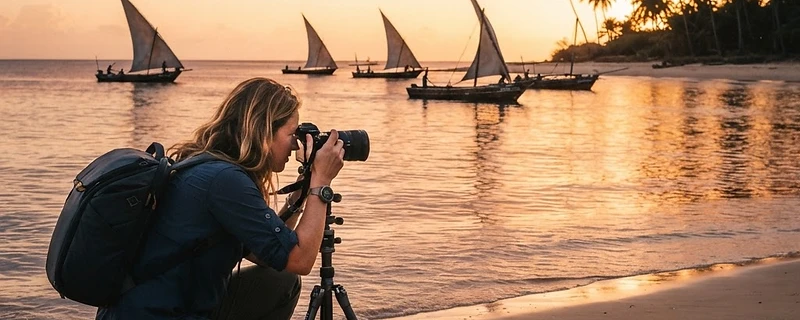
A practical Mozambique photography guide for travelers: landscape, wildlife and street tips, ethical practices, gear advice and community-minded photo opportunities.
Mozambique Photography Guide: Capture Culture & Coast
Mozambique is a photographer’s dream: sweeping coasts, translucent reefs, miombo woodlands, river deltas and cities where Portuguese colonial architecture meets lively markets. This Mozambique photography guide gives you practical, ethical and creative advice to come home with images that respect people and place while celebrating the country’s visual diversity.
Mozambique Photography Guide: Where to Go — Highlights by Region
Mozambique stretches more than 2,400 km of coastline and contains striking inland wilderness. Pick your targets based on subject: marine life, wildlife, landscapes, culture or street scenes.
Coastal and Marine Spots
- Inhambane Province is famous for clear water and marine megafauna — from whale sharks to dugongs and coral gardens. For marine-centric planning see Inhambane Province: The Complete Travel Guide and the focused Whale Shark Mozambique Guide: Inhambane’s Gentle Giants.
- Bazaruto Archipelago and the Quirimbas are ideal for underwater photography and dramatic island landscapes.
- For intimate mangrove and estuary scenes, join community programs such as the Inhambane Mangrove Restoration & Kayak Experience — excellent for golden-hour silhouttes.
Inland & Wildlife
- Niassa Reserve offers remote, photogenic miombo and large mammals — think wide-angle landscapes with roaming elephants. Combine photography with an ethical stay like Lake Niassa Shore Camp and read background on the area in Niassa Reserve: Lions, Elephants & Africa's Largest Miombo Wilderness.
- Sofala and the Zambezi floodplains are rich for birdlife and dramatic river scenes — see Zambezi Delta: Rivers, Floods & Africa's Largest Wetland Rebirth for ecological context.
Cities, Culture & Street Photography
- Maputo’s eclectic streets, markets and Art Deco facades are intimate and immediate — join a local guide like Maputo City Walking Tours to access stories and safe vantage points. Also useful: Maputo Food & Architecture Walking Tour.
- Smaller towns such as Ilha de Moçambique and Quelimane offer rich architectural and social scenes; consider staying in a family homestay like Ilha de Moçambique Family Homestay to build trust and shoot more meaningful portraits.
- Attend cultural experiences such as the Chókwè Tsonga Music & Dance Experience for rhythmic, colorful opportunities.
Mozambique Photography Guide: Gear, Settings & Techniques
Whether you shoot DSLR, mirrorless, or a phone, gear choices should match your subjects.
Essential kit
- Camera body (weather-sealed if possible) and two lenses: a wide (16–35mm or equivalent) and a telephoto (70–200mm or 100–400mm) for wildlife and portraits. A fast 50mm or 85mm is ideal for low-light portraits and streets.
- Tripod — indispensable for dawn/dusk landscapes, star trails and low-light interiors.
- Polarizer and neutral density (ND) filters to manage reflections and shutter speeds over water.
- Sturdy camera bag, rain protection and plenty of spare batteries and memory cards.
Lens and settings by subject
- Landscapes: aperture f/8–f/16 for depth of field; use a tripod for sharpness; shoot RAW.
- Wildlife: put your camera in continuous AF and burst mode; shutter speed 1/1000s+ for fast animals; ISO as required.
- Underwater: use a dedicated housing and wide-angle for big animals; white balance can be adjusted in post, but custom WB in camera helps.
- Street & portraits: shoot wide for environmental portraits (f/5.6–f/8), and shoot at wider apertures (f/1.8–f/2.8) for intimate headshots.
Composition tips
- Use foreground elements (mangrove roots, foreground rocks, palms) to add depth.
- Seek environmental portraits — include clothing, surroundings and tools that tell a story rather than only close-up faces.
- Use light: Mozambique’s coastal light is spectacular at golden hours; harsh midday sun can be used for high-contrast black & white.
Mozambique Photography Guide: Ethical Practices & Community Benefit
Photography in Mozambique is not only about images — it’s about relationships.
Respect is the first rule: ask permission before photographing people, offer to show the images and, where possible, pay a small fee or buy something from them. Photography can be a powerful benefit when it supports local livelihoods.
Practical ethical guidelines
- Always ask for consent before photographing people, especially in markets, homesteads and cultural events. A smile and a polite request in Portuguese or a local language goes a long way.
- Prefer hiring local guides and interpreters. This supports community income and opens doors to respectful shoots — examples include Maputo City Walking Tours and community workshops like Pemba Makonde Art Workshop.
- Share credit and a copy of images with guides and hosts. Consider returning a printed photo as a gesture.
- Buy locally made crafts such as makonde carvings and capulana textiles; these purchases have direct local benefit — learn more in Mozambique Crafts: From Makonde Carvings to Capulana Textiles.
- In protected areas, follow rules, keep distance from wildlife, and opt for low-impact viewing platforms.
Mozambique Photography Guide: Logistics, Permits & Safety
Permits and drones
- Drone rules change often: always check with Mozambican aviation authorities and lodge operators before flying. Many protected areas prohibit drones or require permits.
- Some national parks and concessions require photography permits, especially for professional or commercial use. Confirm with park authorities and your lodge.
Health, safety and timing
- Malaria risk exists in many parts of Mozambique; consult Mozambique Health & Vaccination Guide: What Travelers Need to Know before travel.
- For weather and seasonal planning see Best Time to Visit Mozambique: A Month-by-Month Climate Guide. Tides and lunar cycles strongly affect coastal and estuarine photography.
- Keep equipment insured and backed up: duplicate memory cards and offload to a portable SSD nightly when possible.
Mozambique Photography Guide: How to Work With Communities
Working ethically with communities produces richer images and longer-term partnerships.
- Build trust: stay longer when possible; a two- or three-day stay yields better images than a quick visit.
- Offer something in return: photography workshops, prints, or small donations channeled via trusted community groups.
- Collaborate with community enterprises such as the Dondo Ndau Community Arts Center or homestays like Quelimane Riverside Homestay to ensure benefits are distributed locally.
Practical Tips
- Pack for the climate: quick-dry clothing, sunhat and a rain cover for sudden tropical showers.
- Power: carry a USB power bank and an international adapter; some rural lodges have limited charging.
- Backups: use two memory cards and back up daily to a portable drive.
- Respect privacy: avoid photographing children without clear parental consent.
- Time of day: aim for golden hour for warm, directional light and blue hour for architecture and night markets.
- Tides: coastal photography depends on tides — plan around low or high tide depending on the scene you want.
- Hire locally: use local guides and community experiences like Chókwè Tsonga Music & Dance Experience to access authentic cultural shoots and ensure your presence benefits residents.
Post-Processing & Sharing
- Process RAW files gently to preserve skin tones and natural colors; avoid over-saturation.
- Tag locations responsibly: when photographing vulnerable wildlife or sensitive communities, avoid sharing precise GPS coordinates publicly.
- Credit: when posting images taken with the help of a guide or host, credit them in captions and link to their cooperative or listing where possible.
Recommended Itineraries for Photographers
- Coastal Focus (10–14 days): Maputo (cityscapes/markets) → Inhambane (whale sharks/reefs) → Vilanculos/Bazaruto (island landscapes).
- Wildlife & Wilderness (10–12 days): Niassa Reserve (big mammals) → Tete/Zambezi (river scenes and birds).
- Culture & Architecture (7–10 days): Maputo → Ilha de Moçambique (UNESCO site) → Quelimane and local craft markets.
Combine guided activities such as Maputo City Walking Tours or a stay at Ilha de Moçambique Family Homestay to build relationships and shoot more authentic images.
FAQ
Q: Do I need special permits to photograph in Mozambique?
A: For casual travel photography you usually do not need permits. Commercial shoots, drone use, and professional photography in national parks can require permits — check with local authorities, park management, and your lodge.
Q: Is it safe to photograph wildlife up close?
A: Never approach wildlife. Use a telephoto lens, follow guide instructions, and keep a respectful distance. Approaching animals stresses them and risks safety for both you and the animal.
Q: How should I approach photographing people in markets and villages?
A: Always ask permission. A polite greeting in Portuguese (“Bom dia”) or in a local language eases introductions. Offer a small fee or buy something when taking portrait-style photos. Showing the resulting image is courteous and often appreciated.
Q: When is the best time of year for photography in Mozambique?
A: It depends on subject: whale sharks frequent Inhambane seasonally; bird migrations and floodplains vary. Consult Best Time to Visit Mozambique: A Month-by-Month Climate Guide for specifics.
Q: Can I fly drones over national parks and islands?
A: Drone regulations are dynamic and locationspecific. Many parks and coastal reserves prohibit drones or require permits. Always ask lodge managers and authorities first.
Final Thoughts — A Respectful Mozambique Photography Guide
This Mozambique photography guide is a starting point: aim to make images that honor the people, landscapes and wildlife you encounter. Your photographs should reflect not just beauty, but respect — use your camera to uplift local stories, compensate communities fairly, and protect the fragile environments you visit.
For further reading on logistics and family travel in Mozambique, see Mozambique With Kids: A Family Travel Guide, and to deepen your cultural understanding browse Mozambique Crafts: From Makonde Carvings to Capulana Textiles and Maputo Food & Architecture Walking Tour.
Happy shooting — and remember: permission, payment where appropriate, and a generous spirit will make your photography in Mozambique not just better, but more ethical and meaningful.