From the UNESCO-recognised timbila to the haunting xitende musical bow, Mozambique's traditional instruments span idiophones, drums, strings, and winds. Discover how these connect to American blues and folk roots.
Traditional Musical Instruments of Mozambique: A Complete Guide
The Sound of a Nation
Mozambique's musical instrument tradition is as diverse as its people. Across eleven provinces and dozens of ethnic groups, instruments have been developed, refined, and played for centuries — producing sounds that range from the delicate whisper of the mbira to the thunderous polyphony of the timbila orchestra.
For American audiences, these instruments offer a tangible connection to Mozambican culture — physical objects that can be held, played, and heard. Several have entered the collections of American museums, and a few have even influenced American music.
Idiophones (Self-Sounding Instruments)
Timbila (Chopi Xylophone)
The flagship instrument of Mozambican music — a wooden xylophone with calabash resonators, played in orchestras of 15-25 instruments. UNESCO-recognised. Found in Inhambane province among the Chopi people. Each key is made from mwenje wood, tuned with precision, and fitted with a buzzing membrane.
Mbira (Thumb Piano)
A small wooden board with metal keys (tines) plucked with the thumbs. Found across Mozambique but particularly among the Chopi and in regions influenced by Shona culture (Zimbabwe border areas). The mbira produces a mesmerising, repetitive, trance-inducing sound that accompanies spiritual ceremonies and social gatherings.
Xitende (Musical Bow)
A single-string bow instrument — the string is struck or plucked while the player's mouth acts as a resonator, changing the pitch through harmonic manipulation. One of the oldest instrument types in Africa, the xitende is played by the Chopi and other southern Mozambican groups. Its ethereal, harmonically rich sound connects to the American musical bow tradition (found in Appalachian folk music).
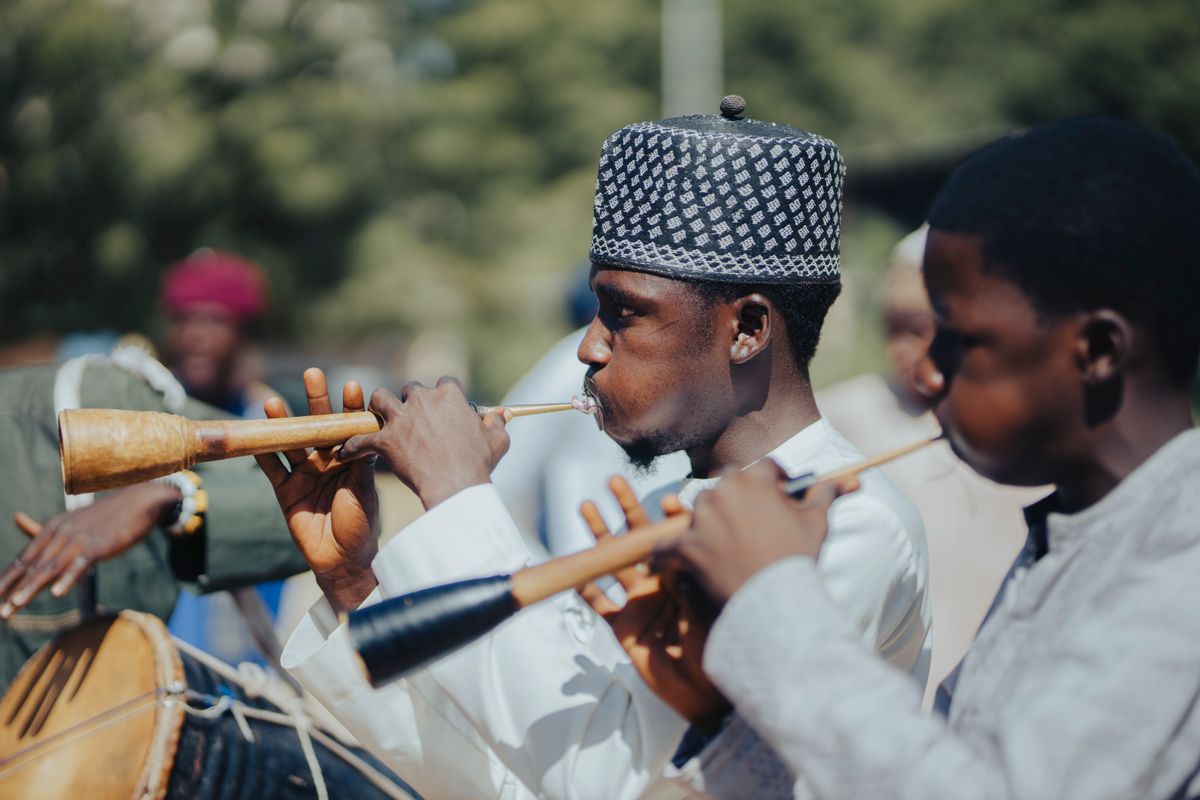
Xigovia (Flute)
Traditional end-blown flutes made from bamboo or reed, played in ensembles to accompany dances and ceremonies. Different ethnic groups have distinct flute traditions, with varying numbers of holes and playing techniques.
Membranophones (Drums)
Ngoma (Ceremonial Drum)
The ngoma is the generic term for drum across Bantu Africa, but each Mozambican ethnic group has its own specific drum types — different sizes, shapes, and playing techniques. The Makonde have tall, cylindrical drums played for Mapiko dances. The Tsonga have a range of drums from small hand drums to large bass drums. Drums are the heartbeat of Mozambican music — without them, there is no dance, no ceremony, no celebration.
Calimba (Hand Drum)
Small, portable hand drums used in informal music-making, particularly by women. The calimba is often played at social gatherings and is accessible to non-specialists — anyone can pick one up and join the rhythm.
Chordophones (String Instruments)
Guitar (Marrabenta Style)
The guitar is not traditionally Mozambican — it arrived with Portuguese colonisers — but the marrabenta guitar style is distinctly Mozambican. The rapid, syncopated, percussive approach to the guitar transforms it from a melodic into a rhythmic instrument. This style connects directly to the guitar traditions of American blues and early rock, both of which drew from African musical roots.
Lekulemba (Musical Bow with Calabash)
A bow instrument with a calabash resonator attached, producing a deeper, louder sound than the xitende. Found in southern Mozambique among the Tsonga people.
Aerophones (Wind Instruments)
Nyanga (Panpipes)
The nyanga panpipes are played in Tete province, particularly in Nyau ceremonies. Made from bamboo of varying lengths, the nyanga produces a haunting, breathy sound that can be both melodic and percussive. The instrument is played while dancing — a feat of coordination that requires the performer to dance and play simultaneously.
Mpempenjele (Animal Horn Trumpet)
Made from kudu or antelope horn, the mpempenjele produces a deep, resonant blast used for signalling and ceremony. Historically used to call communities together or signal in warfare, it now appears primarily in ceremonial contexts.
The American Connection
Mozambican instruments connect to American music through shared African roots:
- The musical bow (xitende) is the ancestor of the American diddley bow — a one-string instrument played in Mississippi Delta blues.
- The mbira influenced American minimalist composers like Steve Reich and has been incorporated into contemporary American music.
- Drum traditions across Africa and the African diaspora share fundamental principles — polyrhythm, call-and-response, the drum as communication.
- The guitar as adapted in marrabenta mirrors the guitar's adaptation in American blues — both transforming a European instrument into an African one.
American musicians who visit Mozambique often seek out traditional instruments — not as exotic curiosities, but as tools for musical exploration. The Making Tracks programme brought Mozambican timbila master Matchume Zango to the US for collaborative performances with American musicians.