Practical Mozambique transportation guide: flights, buses, ferries, car hire, safety tips, SIMs, and ethical advice to travel respectfully across the country.
Mozambique Transportation Guide: Getting Around Nationwide
Welcome. This Mozambique transportation guide will help you move confidently and respectfully across the country — from Maputo’s busy streets to remote beaches and conservation areas. Whether you’re planning intercity travel, island hops, or short urban trips, this guide emphasizes safety, practicality, and the importance of supporting local communities.
Mozambique Transportation Guide: A Quick Overview
Mozambique is a long, narrow country with a varied transport mix: international and domestic flights, coastal and river boats, long-distance coaches and local chapas (shared minibuses), limited passenger rail, and a growing network of roads — some excellent, many challenging. Travel times can be longer than distances suggest, so patience and planning are essential.
- Major hubs: Maputo (south), Beira (centre), Nampula (north) and Pemba (far north).
- Key highway: EN1 (the spine running north–south), with regional connectors like EN6, EN7 and EN8.
- Island and coastal travel: dhows, speedboats, and scheduled ferries to island chains such as Bazaruto and the Quirimbas.
This guide breaks down options, costs, safety, and ethical considerations so you can choose the best way to travel for your itinerary and values.
Mozambique Transportation Guide: Getting to Mozambique
Most international travelers arrive by air. Maputo International Airport (MPM) is the largest gateway in the south; Nampula (APL), Beira (BEW) and Pemba (POL) serve regional and domestic connections.
- Flights: Several carriers connect Mozambique with South Africa, Ethiopia, Kenya, the UAE and Europe. Seasonal charters and regional carriers fill gaps. Book domestic flights early during high season.
- Visas and entry: Before travel, check the latest requirements in Mozambique Visa Requirements: Complete 2026 Entry Guide.
- From overseas hubs: If you’re arriving from the US, see Getting to Mozambique from the US: Flights, Visas, and Everything You Need for tips on routings and layovers.
Arriving by land is common from South Africa, Zimbabwe and Tanzania. Border crossings vary in facilities and opening hours; always have printed and digital copies of documents.
Tip: If your schedule is tight, allow buffer time for customs, traffic and occasional strikes at bus terminals or ferry piers.
Mozambique Transportation Guide: Moving Overland — Buses, Chapas & Trains
Overland travel is the backbone of Mozambique travel for many visitors.
Long-distance coaches and private buses
Long-distance coaches connect major cities and towns. Coaches are generally comfortable and affordable for routes like Maputo–Xai-Xai–Inhambane–Vilanculos or Beira–Chimoio–Tete. Book reputable companies where possible and ask your accommodation to arrange tickets.
Advantages:
- Reliable schedules on main routes
- Reserved seats and luggage handling on higher-tier lines
Limitations:
- Services reduce during off-peak season or on rural routes
- Schedules may change without notice
Chapas and local minibuses
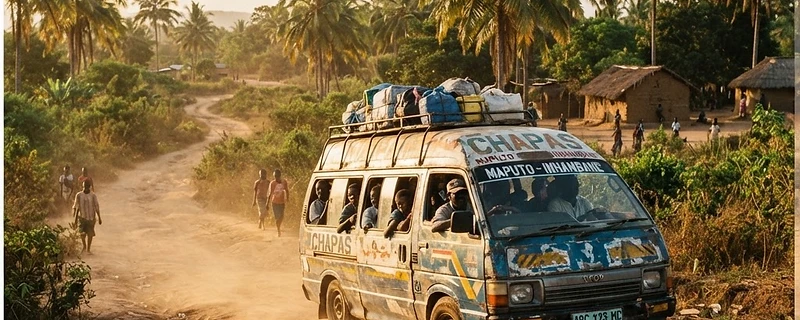
For shorter or rural travel, chapas (shared minibuses) are the fastest, cheapest option. They leave when full and have unofficial schedules. Chapas are an unforgettable way to travel with locals but expect frequent stops and crowded interiors.
Safety and courtesy tips for chapas:
- Keep valuables close and be mindful of sudden stops.
- Respect local seating customs — offer priority seats to elders and pregnant people.
- Confirm the destination with the driver before boarding.
Trains
Mozambique’s passenger rail network is limited but still useful in some corridors (historically run by Caminhos de Ferro de Moçambique). Trains can be scenic and affordable but are subject to delays and limited frequency. If you plan to travel by rail, check current timetables and conditions in advance.
Mozambique Transportation Guide: Domestic Flights, Ferries & Boats
Domestic flights are the fastest way to cover long distances between provinces — especially if you’re short on time.
Domestic flights
Airlines operate routes between Maputo, Beira, Nampula, Pemba, Vilanculos and other destinations. Domestic flights are pricier than buses but save valuable days on the road. Book early during festival and high season.
Ferries, dhows and island boats
Coastal travel is a major part of the Mozambican experience. Islands and archipelagos such as Bazaruto and the Quirimbas are serviced by:
- Scheduled passenger ferries (seasonal)
- Private speedboat transfers (reserve in advance)
- Traditional dhows for short hops and scenic trips
Boat transfers may be weather-dependent and can be rough in open seas. When visiting historic islands like Ilha de Moçambique, consider staying with a family homestay to benefit local households: Ilha de Moçambique Family Homestay.
If you’re interested in conservation-linked experiences along the coast, support projects such as the Inhambane Mangrove Restoration & Kayak Experience which combine transport and community benefit.
Mozambique Transportation Guide: Driving, Car Hire & Road Safety
Self-driving gives you freedom, but Mozambique demands respect on the road.
Road conditions and vehicle recommendations
- Major highways (EN1) are paved and generally in good condition. Secondary and rural roads can be rutted, sandy or flooded during the rainy season (November–April).
- Rent a well-maintained 4x4 if you plan to visit remote parks, highlands (e.g., Mount Namuli) or river crossings.
- Carry spare fuel in remote areas, plus water, a jack and a basic toolkit.
Legalities and insurance
- International driving permit plus your national license are recommended.
- Confirm insurance coverage for cross-border travel if you plan to enter neighboring countries.
- Always get a rental contract in writing, including vehicle condition reports.
Night driving and safety
Avoid driving at night outside towns. Animals, unlit vehicles, pedestrians and poorly marked roads increase risk. If you must travel after dark, drive slowly and plan rest stops.
If self-drive feels daunting, hire a driver/guide. Drivers not only handle roads and local rules but can be cultural interpreters — a meaningful way to invest in local livelihoods.
Mozambique Transportation Guide: Urban Transport, Taxis & Ride Apps
Cities and towns have different transport cultures.
Maputo and larger towns
- Taxis: Use licensed taxis; agree fares in advance or insist on the meter. For safety and convenience, ask your hotel to call a trusted taxi.
- Walking tours and short urban trips are excellent ways to orient yourself; consider Maputo City Walking Tours led by local guides — these keep tourism dollars in the city.
- Ride-hailing: Availability of apps varies between cities and months. If an app exists in your destination, confirm the driver’s identity before hopping in.
Smaller towns and villages
- Local tuk-tuks or motorcycle taxis appear in many towns. Negotiate fares beforehand and prioritize drivers with visible safety gear.
- Respect local norms: if a vehicle is full, wait for the next one rather than pressuring locals for space.
Mozambique Transportation Guide: Accessibility, Luggage & Costs
- Luggage: Pack light for chapa and boat travel. Secure bags against dust and moisture.
- Costs: Expect low-priced local transport and higher costs for domestic flights or private charters. Tipping is appreciated but discretionary; always tip in ways that support workers directly.
- Accessibility: Many rural stations and boats lack formal ramps; if you need mobility assistance, coordinate in advance with operators.
Mozambique Transportation Guide: Respectful, Ethical & Community-Minded Travel
Travel choices affect communities. Prioritize services and operators that demonstrate ethical practices and local benefit.
- Choose local guides and small businesses: They distribute income widely and keep traditions alive.
- Support community listings and experiences: staying at an Ilha de Moçambique Family Homestay or visiting a community camp like Bilene Lagoon Community Camp channels revenue to families.
- If booking safaris or conservation visits, read The Ethical Safari: How to Choose a Safari That Actually Helps Communities before deciding.
- Respect culture and privacy: always ask permission before photographing people or ceremonies, and learn a few phrases in Portuguese or local languages as a courtesy.
Quote local perspectives when you can, and be transparent with hosts about your expectations. Travel respectfully and you’ll build richer connections.
Mozambique Transportation Guide: Practical Tips
Here are clear, actionable tips to make travel smoother.
- Plan for time: Distances look small on a map but travel often takes longer than expected.
- Book domestic flights well in advance during holidays and festival periods.
- Carry cash (metical) for rural areas; cards are accepted mainly in big hotels, shops and ATM networks in cities.
- Buy a local SIM card and data plan for maps and last-mile coordination — see Mozambique SIM Card & Internet Guide — Nationwide Practical Tips.
- Avoid night travel on secondary roads; if you must travel at night, choose a reputable coach or hire a driver.
- Ask your accommodation or host for trusted transport recommendations — local knowledge is invaluable.
- If you’re planning to visit sensitive regions (for example, parts of Cabo Delgado), consult travel advisories and read Is Mozambique Safe for Tourists? An Honest 2026 Safety Guide.
Mozambique Transportation Guide: Sample Day-to-Day Choices
- Short trips in Maputo: walking + Maputo City Walking Tours (/listing/6a8e595ebdace41cc02a442a) or a licensed taxi.
- Maputo to Tofo/Vilanculos: consider an early domestic flight or an overnight coach; for island transfers depart from Vilanculos by speedboat.
- Beira to Gorongosa: combine coach to the park gate and then a local community guide (see Gorongosa Reborn: Africa's Greatest Wildlife Restoration for context on visiting responsibly).
Mozambique Transportation Guide: Emergency Contacts & Health
- Carry local emergency numbers and the address of your country’s consulate or embassy.
- Travel insurance that includes medical evacuation is highly recommended for remote travel and marine activities.
- For health: bring a basic first-aid kit, insect repellent, sun protection and any prescription medicines in original packaging.
Mozambique Transportation Guide: FAQ
1. Is it safe to travel around Mozambique by public transport?
Public transport is widely used and generally safe on main routes. Use common-sense precautions: keep valuables secured, travel with more people at night, and check recent travel advisories for security updates. For region-specific safety insights, see Is Mozambique Safe for Tourists? An Honest 2026 Safety Guide.
2. Can I use my phone and mobile data everywhere?
Mobile coverage is good in cities and many towns, but patchy in remote areas. Buy a local SIM on arrival for best rates and data. More on connectivity in Mozambique SIM Card & Internet Guide — Nationwide Practical Tips.
3. Are ferries and boat transfers reliable?
Ferries and boats run reliably on popular routes but are seasonal and weather-dependent. Book in advance during high season and allow flexibility for delays. For eco-focused coastal activities, consider supporting community-linked projects like the Inhambane Mangrove Restoration & Kayak Experience.
4. Should I rent a car or hire a driver?
If you’re comfortable driving on varied road conditions and have 4x4 experience, self-drive can be rewarding. For first-time visitors or those visiting remote or culturally sensitive areas, hiring a local driver/guide is safer and provides economic benefits to local people.
5. How much time should I allow between towns?
Allow generous time. For example, a 300–400 km stretch on the EN1 may take 6–10 hours depending on stops and roadworks. Plan flexible itineraries and prioritize experiences over rigid schedules.
Mozambique Transportation Guide: Final Thoughts
This Mozambique transportation guide aims to give you practical routes, honest expectations, and ethical choices so your travel benefits both you and the communities you visit. Travel with curiosity and respect, choose local guides and experiences where possible, and leave room for Mozambique’s generous surprises — the landscapes, music, food and people reward the patient traveler.
If you’re building an itinerary, consider pairing wildlife restoration visits like Gorongosa Reborn: Africa's Greatest Wildlife Restoration with coastal time or cultural stays — for example, a family homestay on Ilha de Moçambique (/listing/6a8e595ebdace41cc02a4426) or a community camp at Bilene (/listing/6a8e592df0c4157d6df44391). For safari planning, read The Ethical Safari to ensure your trip supports conservation and communities.
Safe travels — and may this Mozambique transportation guide help you move through the country with confidence, dignity and a commitment to positive impact.