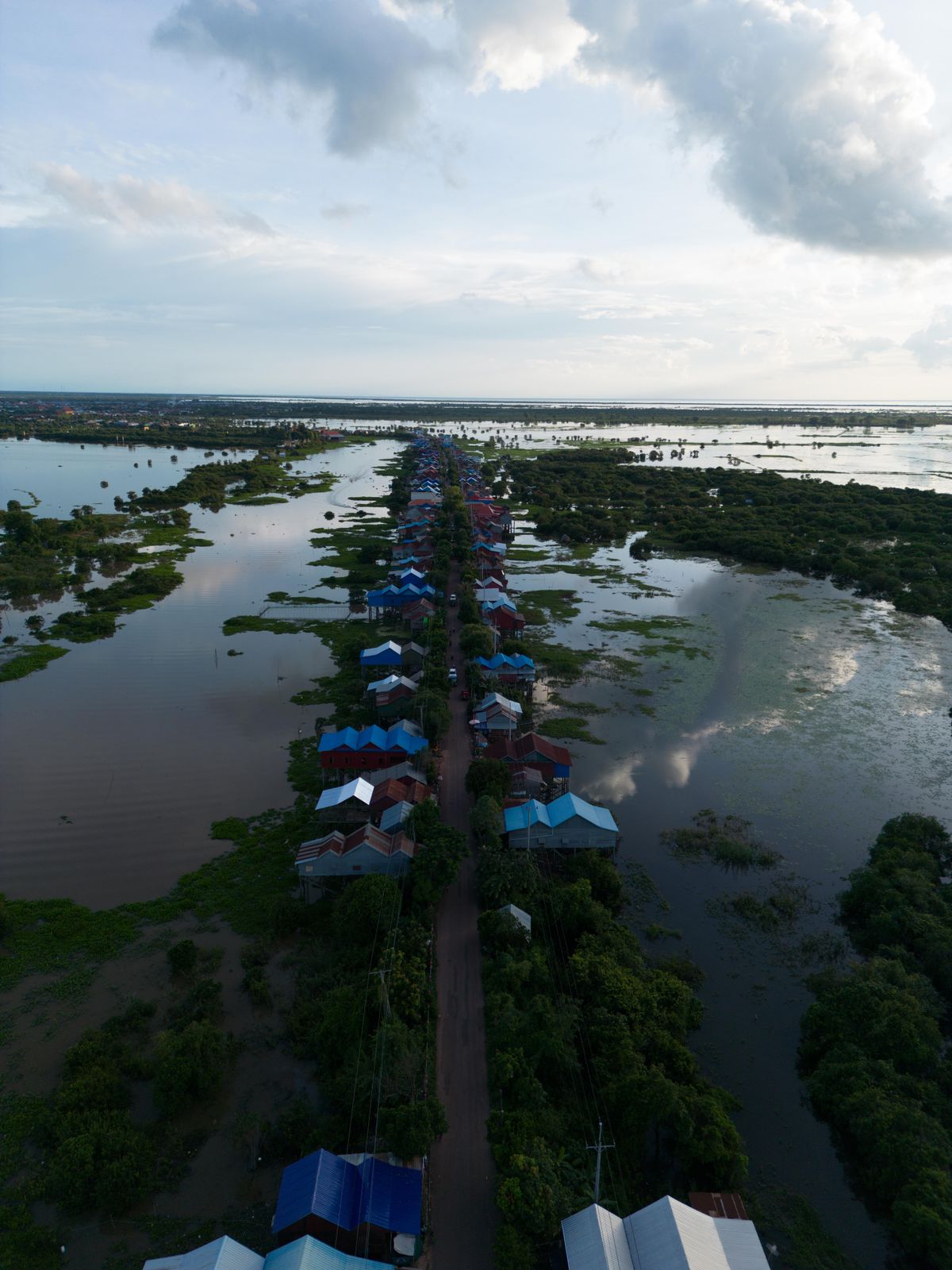
Where the Zambezi meets the sea, a vast wetland is undergoing one of Africa's greatest ecological recoveries. After decades of disruption by dams, the Delta is healing — and the wildlife is returning.
Zambezi Delta: Rivers, Floods & Africa's Largest Wetland Rebirth
The Zambezi River doesn't end when it reaches the coast of Zambezia Province — it transforms. Over 18,000 km² of channels, floodplains, mangroves, and lakes form one of Africa's great wetlands: the Zambezi Delta. After a century of disruption, this ecosystem is experiencing one of the most remarkable ecological recoveries on the continent.
The Delta System
Geography
The Zambezi Delta covers approximately 18,000 km² of central Mozambique, where the river splits into multiple channels before reaching the Indian Ocean. The main channels — the Zambezi (Chinde), Mucelo, and Cuacua — create a vast network of waterways, oxbow lakes, seasonal floodplains, and mangrove forests.
The Delta includes:
- 8,000 km² of floodplains that flood annually
- 1,800 km² of mangroves — among the largest mangrove areas in East Africa
- Hundreds of lakes and lagoons formed by shifting river channels
- Coastal dunes and beaches along the 200 km shoreline
The River's Journey
The Zambezi begins in Zambia, flows through Angola, along the borders of Namibia, Botswana, and Zimbabwe, enters Mozambique at Tete, and travels 800 km before fanning into the Delta. Along the way, it is harnessed by two massive dams — Kariba (Zambia/Zimbabwe) and Cahora Bassa (Mozambique) — that have profoundly altered the river's natural rhythms.
The Great Disruption
Before the Dams
For millennia, the Zambezi Delta functioned on a natural flood pulse. Each rainy season (November–March), the river would swell, inundating the floodplains. This annual flood:
- Deposited nutrient-rich silt across 8,000 km²
- Created breeding grounds for fish (the Delta was one of Africa's most productive fisheries)
- Sustained vast herds of waterbuffalo, waterbuck, reedbuck, and hippo
- Fed mangrove forests that protected the coastline and nurtured marine life
- Supported hundreds of thousands of people who depended on the flood's bounty
After the Dams (1959–2000)
When Kariba Dam was completed in 1959 (followed by Cahora Bassa in 1974), the flood pulse was drastically reduced. The dams trapped water for hydroelectric generation, releasing it in steady, unnatural flows that:
- Killed the floodplains — without annual flooding, grasslands dried and invasive species took over
- Collapsed fisheries — fish spawning cycles depend on flood signals; without them, populations crashed
- Shrunk mangroves — reduced freshwater flow allowed saltwater intrusion, killing mangrove fringe
- Decimated wildlife — buffalo, waterbuck, and other grazing species lost their habitat
- Impacted communities — farmers who depended on flood-recession agriculture (planting as floods recede, using moist, fertile soil) lost their livelihoods
- Coastal erosion — without silt deposition, the coastline eroded, threatening communities
The Zambezi Delta became a textbook example of how large dams can devastate downstream ecosystems — a case study in unintended consequences that scientists worldwide reference.
The Recovery (2000–Present)
Environmental Flood Releases
In a landmark shift, Cahora Bassa Dam operators began implementing controlled flood releases — mimicking the natural flood pulse. These environmental flows have:
- Reinvigorated floodplain grasslands
- Triggered fish spawning
- Delivered silt to rebuilding mangroves
- Signaled wildlife to return to historical grazing areas
The Marromeu Buffalo Reserve
At the heart of the Delta, the Marromeu Buffalo Reserve (also called Marromeu Complex) protects 10,000 km² of Delta habitat. Before the dams, this area held one of Africa's densest populations of Cape buffalo — an estimated 55,000 animals. By the 1990s, that number had crashed to fewer than 5,000.
Today, thanks to improved water management and anti-poaching efforts, buffalo numbers are recovering. The reserve also supports:
- Elephants — returning to historical Delta ranges
- Lions — following the buffalo herds
- Hippos — abundant in the channels
- Crocodiles — some of Africa's largest populations
- Waterbirds — including wattled cranes, slaty egrets, and great white pelicans
Mangrove Restoration
The Delta's mangroves are critical — they sequester carbon at rates 4x higher than terrestrial forests, protect against cyclones, and serve as nurseries for shrimp and fish. Community-led restoration projects have replanted hundreds of hectares of mangroves, with species selection adapted to each zone's salinity level.
Community-Based Conservation
The Delta is home to approximately 500,000 people, primarily from the Sena and Chuabo ethnic groups. Their future is inseparable from the Delta's health. Key initiatives:
- Sustainable fisheries cooperatives — communities manage fishing zones with seasonal closures
- Flood-recession agriculture — working with dam operators to time releases for planting
- Community tourism — visitors experience Delta life with fishing families
- Mangrove guardians — paid community members protect and restore mangrove areas
- Beekeeping — hives in mangrove forests produce honey while providing economic incentive for conservation
Visiting the Zambezi Delta
The Delta is one of Mozambique's most remote and least-visited destinations — which is exactly its appeal.
How to Get There
- By air: Charter flights from Beira or Quelimane to Marromeu or Chinde
- By road: Very challenging. From Quelimane, a rough 4x4 track reaches Marromeu (dry season only, full day). From Beira, the EN1 to Dondo, then north — seasonal tracks only.
- By boat: River transport from Marromeu down the Zambezi to Chinde — the most scenic and authentic route.
What to Experience
- Canoeing through floodplain channels — silently gliding past hippos, elephants, and vast bird colonies
- Sport fishing — tiger fish and vundu catfish in the main channels
- Bird watching — one of Africa's premier birding destinations, with seasonal aggregations of thousands of waterbirds
- Community visits — spend a day with fishing families, learn about flood-recession farming, eat fresh river fish
- Mangrove walks — guided tours through restoration sites
- Buffalo safaris — game viewing in the Marromeu Complex (basic infrastructure, bring your own vehicle and guide)
Where to Stay
- Community homestays in riverside villages — the most authentic experience
- Rustic camps at Marromeu — basic, self-catering
- Chinde — historic coastal town at the river mouth, with basic guesthouses and incredible birdlife
Why the Delta Matters
The Zambezi Delta is one of the planet's great wetland ecosystems — comparable in significance to the Okavango Delta in Botswana or the Pantanal in Brazil, yet a fraction as known or visited. Its recovery demonstrates that ecological damage is not always permanent. With science, political will, and community engagement, even severely disrupted ecosystems can heal.
The Delta also tells a story about the relationship between energy and environment. Cahora Bassa Dam provides electricity to millions — but that power came at an ecological cost that is still being paid. Finding the balance between human development and ecosystem health is the defining challenge of our time, and the Zambezi Delta is where that conversation is most visible in Mozambique.
For travelers, the Delta offers something increasingly rare in our interconnected world: genuine wilderness, genuinely remote, genuinely wild — and a front-row seat to one of nature's most inspiring comeback stories.