Masks in Mozambique are not decorations — they are portals to the spirit world. Explore the Mapiko and Nyau mask traditions, their UNESCO recognition, and how they connect to global African diaspora mask cultures in America.
Traditional Mask Making: Mapiko, Nyau, and Spiritual Art
Masks That Speak to the Dead
In Mozambique, a mask is never just an object. It is a conduit — a bridge between the living and the dead, the human and the spirit, the individual and the ancestral collective. When a dancer puts on a mask, he ceases to be himself. He becomes the spirit the mask represents.
Two of Mozambique's most significant mask traditions — Mapiko of the Makonde people and Nyau of the Chewa/Nyau peoples — have deep cultural roots and growing international recognition. The Mapiko dance was inscribed on UNESCO's Representative List of the Intangible Cultural Heritage of Humanity in 2015.
Mapiko: The Mask of the Makonde
The Mapiko is the central ritual dance of the Makonde people of northern Mozambique (Cabo Delgado and Niassa provinces). The word mapiko means both the mask and the dance itself.
The Mask
Mapiko masks are carved from soft njala wood — a lightweight wood that allows the dancer to wear the mask for extended periods. The masks are realistic but stylised, depicting human faces with strong Makonde features: prominent foreheads, scarification marks, filed teeth (in older masks), and expressions ranging from serene to terrifying.
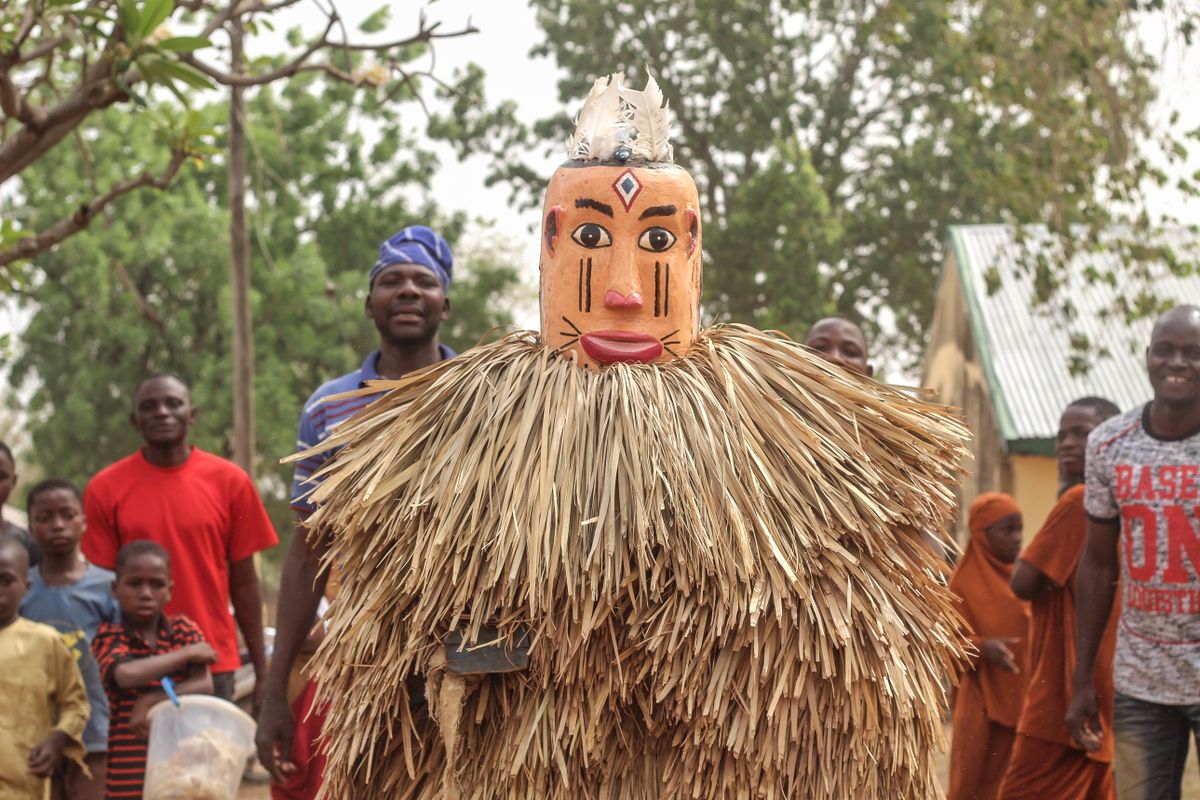
The mask is typically topped with a headpiece made of beeswax, human hair, or fibre, and the dancer wears a full-body costume of cloth and fibre that conceals every inch of skin. The concealment is essential: the audience must believe the dancer is not a human but a spirit.
The Dance
The Mapiko dance is performed at initiation ceremonies — the rite of passage from puberty to adulthood. Young men and women, after weeks of seclusion and instruction, are presented to the community through the Mapiko performance.
The dance is intense and athletic. The masked dancer moves to the rhythm of drums, his movements narrating stories of the ancestors, the spirits, and the moral lessons of Makonde society. The performance can last hours, with the dancer reaching states of trance-like intensity.
A Tradition of Subversion
What makes Mapiko particularly fascinating is its history of social subversion. During the colonial period, Mapiko dancers used the mask's anonymity to criticise Portuguese authority — performing satirical skits that would have been dangerous to voice openly. The tradition continues today, with Mapiko performances often incorporating commentary on contemporary politics, gender roles, and social change.
Nyau: The Secret Society
The Nyau (or Gule Wamkulu) tradition is practised by the Chewa people, who straddle the Mozambique-Malawi border in Tete and Niassa provinces. Like Mapiko, it was recognised by UNESCO as Intangible Cultural Heritage.
Nyau is a secret society — membership is restricted to initiated men, and the knowledge of mask meanings, dance sequences, and spiritual content is closely guarded. The masks represent spirits, animals, and characters from Chewa cosmology, each with specific roles in performances that accompany funerals, initiation ceremonies, and community gatherings.
The most striking Nyau masks are elaborate constructions — not just face masks but full costumes representing animals (elephants, antelopes, wild boars) or composite creatures that exist only in Chewa spiritual cosmology. The wearer is believed to be possessed by the spirit the mask represents.
Masks and the American Connection
Mozambican mask traditions resonate powerfully with African American cultural heritage. The masking traditions of the African diaspora — from the Jonkonnu celebrations of the Bahamas and American South to the Mardi Gras Indians of New Orleans — share deep structural similarities with African mask traditions like Mapiko and Nyau:
- The mask as a vehicle for spirit possession
- The performer's anonymity enabling social commentary
- The connection between masking and rites of passage
- The use of performance to maintain community cohesion in the face of oppression
For African American audiences, encountering Mozambican mask traditions can be a powerful experience of cultural reconnection — recognising patterns and principles that survived the Middle Passage and continue to shape African diasporic culture in America.
DanceAfrica 2025 at Brooklyn Academy of Music specifically honoured Mozambican cultural traditions, bringing mask-based performance art to American audiences. The festival's celebration of Mozambican dance and music created direct cultural exchange between Makonde and Chewa traditions and the African American community.
Preservation and Challenge
Both Mapiko and Nyau face challenges:
- Christianisation has led some communities to abandon traditional mask practices.
- Modernisation and urban migration draw young people away from initiation traditions.
- Political instability in Cabo Delgado has disrupted Makonde cultural life.
- Commercialisation — masks made for the tourist market lack the spiritual depth of ceremonial masks.
Yet the traditions persist. UNESCO recognition has brought international attention and resources. Cultural organisations within Mozambique work to document and transmit mask-making knowledge to younger generations. And the growing global interest in African cultural heritage — driven by museums, festivals, and diaspora communities — creates new audiences for these ancient traditions.