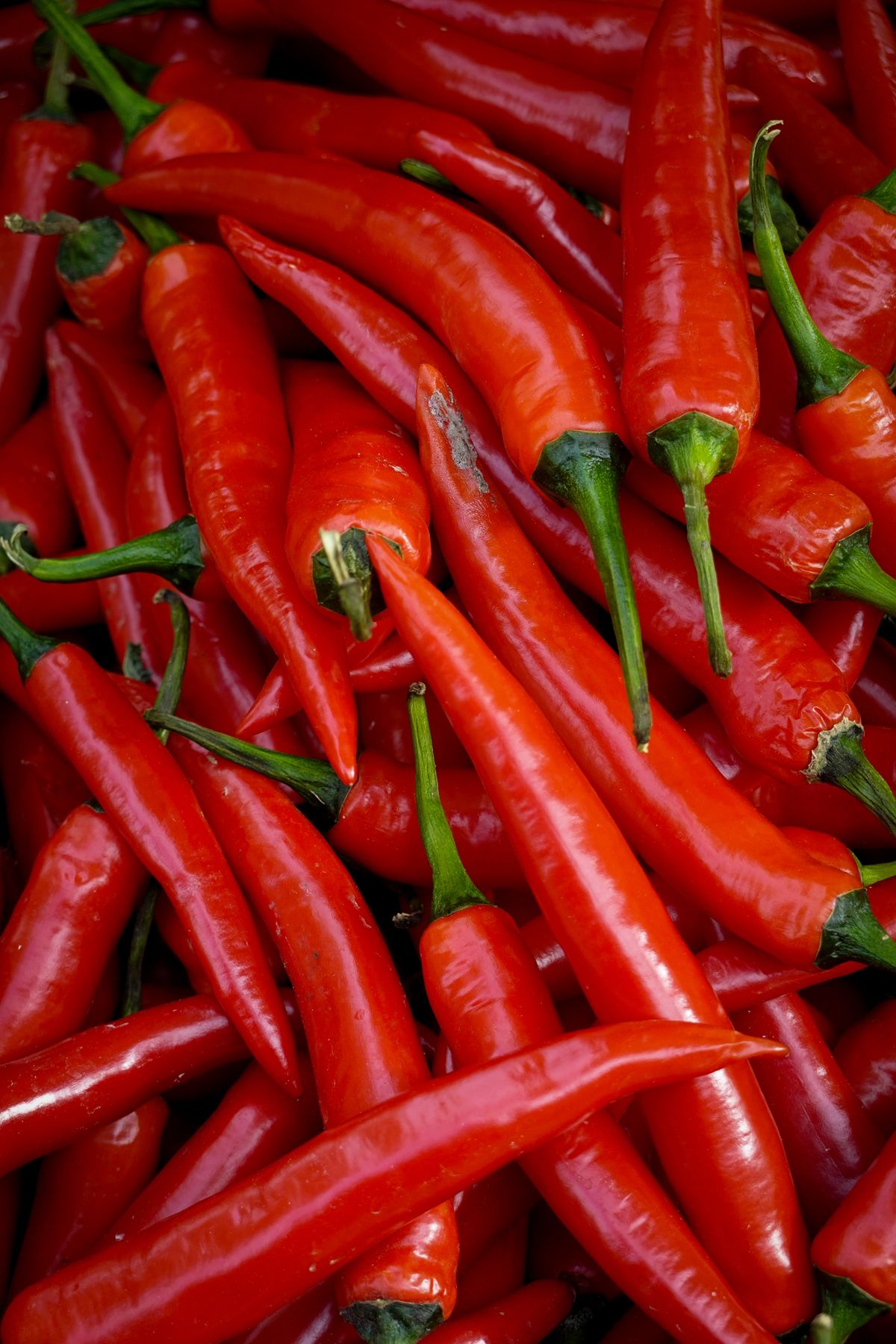
The little red chili that conquered the world started in Mozambique. From the Swahili coast to Nando's restaurants in 35 countries, peri-peri is a story of trade, flavor, and cultural fusion — and the best version is still made in a Mozambican kitchen.
Peri-Peri: Mozambique's Fiery Gift to the World
Walk into any restaurant, market, or home kitchen in Mozambique, and you'll find it — a small bottle of bright red, intensely aromatic chili sauce that defines the country's flavor profile. Peri-peri (or piri-piri) is more than a condiment in Mozambique; it's an identity.
The Origin Story
A Chili Travels the World
The peri-peri chili (Capsicum frutescens) is actually native to the Americas, like all chili peppers. But the story of how it got its name — and its global identity — is a Mozambican story.
Portuguese traders, who had encountered chili peppers in Brazil, brought them to their African colonies in the 16th century. The chili thrived in Mozambique's climate and was adopted enthusiastically by local communities. The name "peri-peri" comes from the Swahili word piri-piri, meaning "pepper-pepper" — a reduplication that emphasizes the chili's intensity.
From Mozambique, the chili and its sauce traveled back to Portugal with returning colonists and traders, and then outward to the world. Today, peri-peri sauce is a global phenomenon — Nando's, the South African-Portuguese restaurant chain, operates in 35 countries. But the original, the authentic, the best peri-peri is still made by hand in Mozambican kitchens.
The Mozambican Difference
What makes Mozambican peri-peri different from the commercial versions?
- Freshness — Mozambican peri-peri is made with fresh chilies, not dried. The flavor is brighter, more complex, and less one-dimensional heat.
- Lemon, not lime — Mozambican peri-peri uses lemon (limão), which grows abundantly, giving a sharper, cleaner acidity than lime.
- Garlic — lots of it, crushed, not minced. The garlic infuses the oil over days.
- Oil, not vinegar — while commercial peri-peri uses vinegar as a preservative, the traditional Mozambican version uses oil, which creates a richer, smoother sauce.
- Bay leaves and oregano — subtle herbal notes that commercial sauces often skip.
- Salt from the sea — Mozambique's coastline provides abundant sea salt.
The Varieties
Peri-Peri Simples (Simple)
The everyday sauce found on every table: fresh chilies, lemon, garlic, oil, salt. Whizzed in a blender or pounded in a mortar. Keeps for a week in the refrigerator.
Peri-Peri com Prawns
The classic Mozambican preparation — prawns marinated in peri-peri, then grilled over charcoal. The sauce caramelizes on the shell, creating a smoky, spicy, sweet crust. This is the dish that made Mozambican cuisine famous.
Peri-Peri Chicken (Frango à Cafreal)
Whole chicken marinated in a thick peri-peri paste (with paprika, garlic, and lemon), then grilled over open flame. The Portuguese-Mozambican fusion dish that became a global icon.
Peri-Peri Oil
A gentler version — chilies steeped in oil for weeks. Used for cooking, drizzling, or as a bread dip. The oil absorbs the chili's flavor without the intense heat.
Traditional Mozambican Peri-Peri Sauce Recipe
Ingredients
- 15–20 fresh peri-peri chilies (or bird's eye chilies as substitute)
- 6 cloves garlic, peeled
- 1 large lemon, juiced (about 3 tablespoons)
- 1 cup neutral oil (sunflower or canola)
- 1 teaspoon sea salt
- 1 bay leaf
- ½ teaspoon dried oregano
Method
- Wear gloves. Remove stems from chilies. For a milder sauce, remove seeds; for full heat, leave them.
- Blend chilies, garlic, salt, oregano, and lemon juice in a blender until smooth.
- Transfer to a clean glass jar.
- Add the oil and bay leaf. Stir well.
- Let rest at room temperature for 24 hours, then refrigerate.
- Best after 3–5 days — the flavors meld and the garlic mellows.
- Keeps refrigerated for up to 2 weeks (if it lasts that long).
Variations
- Creamy peri-peri: Add 2 tablespoons of mayonnaise and blend.
- Coconut peri-peri: Add 2 tablespoons of coconut milk for a richer, milder sauce.
- Smoky peri-peri: Add 1 teaspoon of smoked paprika.
- Herb peri-peri: Add fresh cilantro (coentro) and parsley.
The Chili Itself
The peri-peri chili is small — 2–4 cm long — and packs a serious punch at 50,000–175,000 Scoville Heat Units (SHU). For comparison:
- Bell pepper: 0 SHU
- Jalapeño: 2,500–8,000 SHU
- Cayenne: 30,000–50,000 SHU
- Peri-peri: 50,000–175,000 SHU
- Habanero: 100,000–350,000 SHU
It's hot, but not devastatingly so. The beauty of peri-peri is the flavor — fruity, slightly smoky, and complex — which sits beneath the heat. The heat builds rather than hitting all at once, making it possible to enjoy the flavor before the fire takes over.
Where to Experience the Best Peri-Peri in Mozambique
- Maputo: Costa do Sol restaurant (since 1938) serves legendary peri-peri prawns. Any beachside café on the Marginal.
- Beira: Beach shacks serve grilled fish with house-made peri-peri.
- Inhambane/Tofo: Seafood grills with peri-peri made from locally grown chilies.
- Rural markets: Buy dried peri-peri chilies — the ultimate souvenir. They keep indefinitely and a little goes a very long way.
The Cultural Significance
Peri-peri represents the essence of Mozambican culinary identity — a fusion of indigenous African ingredients, Arab-Swahili trade language, and Portuguese cooking techniques. It's a small condiment that tells the story of a nation: colonized but not conquered, influenced but never imitative, always adding its own fire.
Every family has their recipe, passed down through generations. Every cook guards their secret ratio of chili to garlic to lemon. It's one of those foods that you can't fully understand until you've sat at a Mozambican table, squeezed the lemon, mixed the sauce with your fingers, and felt the heat bloom across your palate while the Indian Ocean breeze cools your skin.
That's peri-peri. Not a sauce. A memory of Mozambique, bottled.