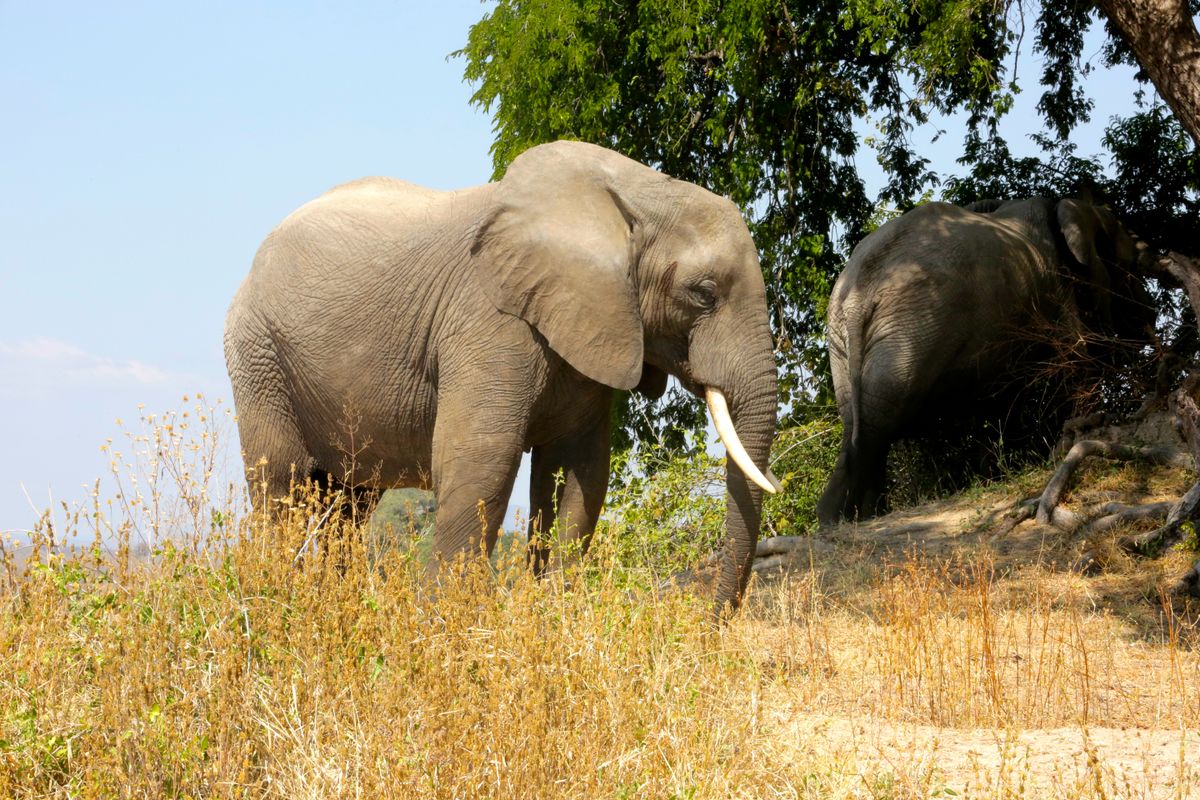
Twice the size of Kruger, the Niassa Reserve protects 42,000 km² of untouched miombo woodland — home to 40% of Mozambique's elephants, three endemic species, and some of Africa's last truly wild lions.
Niassa Reserve: Lions, Elephants & Africa's Largest Miombo Wilderness
In the remote far north of Mozambique, where the Rovuma River forms the border with Tanzania, lies one of Africa's last great wilderness areas. The Niassa Reserve is not a park you drive through in a day — it's an ecosystem so vast, so wild, and so intact that it defies the imagination of anyone who thought Africa's wild places were all mapped and tamed.
The Scale
At 42,000 km², Niassa Reserve is:
- Twice the size of Kruger National Park (South Africa)
- Larger than Switzerland
- The largest protected area in Mozambique
- One of the largest miombo woodland ecosystems on Earth
Miombo — the deciduous woodland dominated by Brachystegia trees — covers much of southern-central Africa, but nowhere is it as extensive and undisturbed as in Niassa. This is the Africa that existed before fences, before roads, before boundaries.
Wildlife
Niassa is Mozambique's most important conservation area, harboring populations that have survived civil war, poaching, and isolation — and are now recovering.
Key Species
| Species | Estimated Population | Significance | |---------|---------------------|--------------| | African Elephant | ~4,000+ | 40% of Mozambique's elephants; recovering from heavy poaching | | Lion | ~800–1,000 | One of Africa's largest lion populations; truly wild, no habituation | | African Wild Dog | ~300+ | One of the continent's most important populations | | Leopard | Unknown (common) | Widespread but rarely seen | | Buffalo | ~10,000+ | Large herds in the Lugenda River valley | | Sable Antelope | Significant | Miombo specialist; impressive herds | | Lichtenstein's Hartebeest | Common | A species characteristic of Niassa's woodlands |
Three Endemic Species
Niassa is the only place on Earth where you can find:
- Niassa wildebeest (Connochaetes taurinus johnstoni) — a subspecies with distinctive white beard and chevron
- Boehm's zebra (Equus quagga boehmi) — a subspecies with fewer, wider stripes
- Johnston's impala — a subspecies with a black stripe on the rump
Birds
Over 400 bird species, including the rare Tanzanian red-winged francolin, Niassa flameback (a woodpecker), Pell's fishing owl, and massive carmine bee-eater colonies that nest in the Rovuma riverbanks, creating living walls of pink.
The Landscape
The Lugenda River
The lifeblood of the reserve. The Lugenda winds through the miombo, its banks lined with towering Borassus palms and massive baobab trees. Sand rivers feed into it, creating seasonal floodplains that attract wildlife during the dry season. The river is navigable by canoe — one of the most extraordinary wilderness experiences in Africa.
The Mecula Plateau
Rising to 1,441 meters, the Mecula Mountains create a dramatic backdrop. The plateau is cooler, wetter, and home to isolated forest patches that harbor species not found in the surrounding miombo — a sky island effect.
Inselsbergs & Rock Formations
Granite inselbergs — dramatic rock domes rising from the woodland — dot the landscape. The most famous is the Lichinga Plateau escarpment, offering panoramic views across endless miombo to the horizon.
Conservation History & Challenges
The War Years (1977–1992)
Mozambique's civil war devastated wildlife across the country. Niassa, being remote, fared better than Gorongosa or Banhine, but still lost thousands of elephants to ivory poaching. The reserve became a no-go zone for decades.
The Recovery (2000–Present)
In 2000, the Niassa Conservation Company (NCC) and later the WCS (Wildlife Conservation Society) took over management. The results have been remarkable:
- Elephant populations stabilized and are growing
- Anti-poaching patrols (community rangers) expanded
- Three luxury eco-lodges established, generating revenue for conservation
- Community programs ensure local people benefit from wildlife tourism
Current Challenges
- Bushmeat poaching — wire snares set for antelopes catch everything
- Elephant ivory — still targeted by organized syndicates
- Human-wildlife conflict — communities around the reserve lose crops to elephants
- Mining concessions — prospecting licenses overlap with reserve boundaries
- Isolation — Niassa's remoteness protects it but makes management expensive
Visiting Niassa Reserve
How to Get There
Niassa is genuinely remote — which is part of its magic.
- By air: Charter flights from Pemba or Lichinga to reserve airstrips (30–45 minutes). This is the standard access method.
- By road: From Lichinga, a rough 4x4 track crosses 150 km to the reserve entrance at Likuka. Self-drive only for experienced 4x4 travelers — allow a full day, dry season only.
Where to Stay
- Lugenda Bush Camp — luxury tented camp on the Lugenda River. Walking safaris, canoeing, game drives.
- Méké Lodge — exclusive-use, private guiding, ultra-remote.
- Community campsites — basic but positioned at stunning river confluences. Self-catering, bring everything.
Best Time to Visit
- June–October (dry season): Best wildlife viewing as animals concentrate along rivers. Comfortable temperatures.
- November–December: Bird watching spectacular. Hot and first rains may close roads.
- January–April: Most areas inaccessible. Reserve effectively closed.
What Makes Niassa Different
- No crowds. You may be the only vehicle in 42,000 km².
- Walking safaris are the signature experience — tracking lions on foot with expert guides.
- Canoeing the Lugenda — gliding past elephants drinking, hippos watching, fish eagles calling.
- Community rangers — your guides are local people who grew up in the miombo and know every track, call, and sign.
The Bigger Picture
Niassa Reserve represents one of conservation's greatest opportunities. In a world where natural habitats are shrinking, Niassa's miombo woodland remains almost entirely intact. It is a carbon sink of global significance, a watershed protecting the Rovuma River system, and a reservoir of biodiversity that scientists are only beginning to understand.
The communities living around Niassa — primarily Yao and Makonde people — are the ultimate stewards. Conservation that excludes them is conservation that fails. The most promising initiatives in Niassa are those that connect wildlife protection with community prosperity: employing rangers, funding schools, supporting sustainable enterprise, and ensuring that a live elephant is worth more to a community than a poached one.
Niassa is not just a reserve. It's a test of whether humanity can protect something vast and wild — simply because it's worth protecting.