
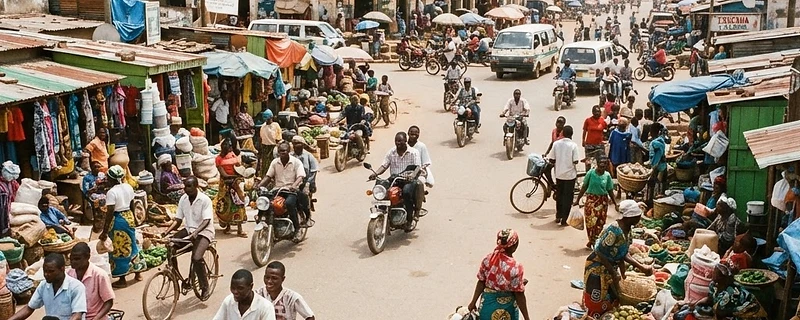
Nampula is Mozambique's third-largest city and the gateway to the north. But it's far more than a transit point — it's a living crossroads of trade, migration, and culture.
More Than a Stopover
Most travellers know Nampula as the city you pass through on the way to Ilha de Moçambique. The airport, the sprawling municipal market, the junction of highways heading north to Cabo Delgado, south to Beira, east to the coast — Nampula is Mozambique's great transit hub. But to treat it as a stopover is to miss one of the most dynamic urban stories in southern Africa.
Nampula is Mozambique's third-largest city (after Maputo and Matola), with a population approaching 750,000. It is the economic capital of the north — a city of traders, factories, universities, and a relentless, noisy, creative energy that surprises anyone who lingers.
A City Built on Trade
Nampula's history is written in its markets. The sprawling Mercado Central — a labyrinth of stalls, shouting vendors, and narrow passages — has been the commercial heart of northern Mozambique since the colonial era. Here you can buy anything: cashew nuts from Nampula province, cotton from the interior, fish from the coast, textiles imported from Asia, mobile phones, motorbike parts, traditional medicine, fresh bread.
The market reflects Nampula's role as a crossroads. The languages you hear — Macua, Portuguese, Swahili, Yao, Sena, English — tell the story of a city that sits at the intersection of Mozambique's ethnic and trade networks.
The Colonial Layer
Founded by the Portuguese in 1907 as a military outpost, Nampula grew rapidly during the colonial era as an administrative and agricultural centre. The city's layout — wide avenues radiating from a central Praça — still bears the imprint of colonial urban planning. The Nampula Railway, built to connect the interior to the port of Nacala, transformed the city into a logistics hub, a role it maintains today.
The most striking colonial-era building is the Nampula Cathedral, a white-washed structure that dominates the city skyline. But the real architectural story is not in the colonial remnants — it is in what the people of Nampula built around them.
The Macua Heart
Nampula is the cultural heartland of the Macua people, Mozambique's largest ethnic group. The Macua have lived in this region for centuries, practicing agriculture, trading along the coast, and maintaining a matrilineal social system that predates both Islam and Christianity.
In Nampula, Macua culture is not a museum piece — it is alive. You see it in the capulanas women wear, in the rhythms of marrabenta and nampula music (yes, there is a music genre named after the city), in the food (matapa, xima, grilled fish), and in the markets where Macua traders — especially women — dominate commerce.
A City of Movement
Nampula never stops moving. The chapas (minibuses) honk and weave through traffic. Motorbike taxis — myladies — zip between trucks. At dawn, the sound of muana (the call to prayer from Nampula's many mosques) blends with church bells and the roar of the market waking up.
The city's energy comes from its position: everyone in northern Mozambique passes through Nampula eventually. Students coming to the university. Traders heading to Nacala port. Farmers bringing produce to market. Workers migrating to the coal mines of Tete. Nampula collects them all.
What to See and Do
- Mercado Central: Get lost. Buy cashews. Watch commerce happen.
- Museu Nacional de Etnografia: A small but important museum showcasing the material culture of northern Mozambique's ethnic groups.
- Nampula Cathedral: Climb the steps for a view over the city.
- Ilha de Moçambique: Two hours east — the UNESCO World Heritage site that was Mozambique's first capital.
- Nacala Corridor: Drive the railway route to Nacala, Mozambique's deepest port.
- Local music: Nampula has its own music genre — nampula or marrabenta nortenha. Find a bar, order a 2M beer, and listen.
The North's Beating Heart
Nampula is not beautiful in the conventional sense. It is dusty, noisy, crowded. But it pulses with the kind of energy that only a true crossroads city can generate. Every face on the street tells a story of migration, trade, and survival. Every market stall is a tiny economy. Every chapa is a moving piece of the network that connects all of northern Mozambique.
Spend a day here. Eat at a street stall. Listen to the market. Nampula will not be the highlight of your Instagram feed, but it will be one of the most real places you ever visit.
Find ethical stays and cultural experiences in Nampula at nendeni.com.