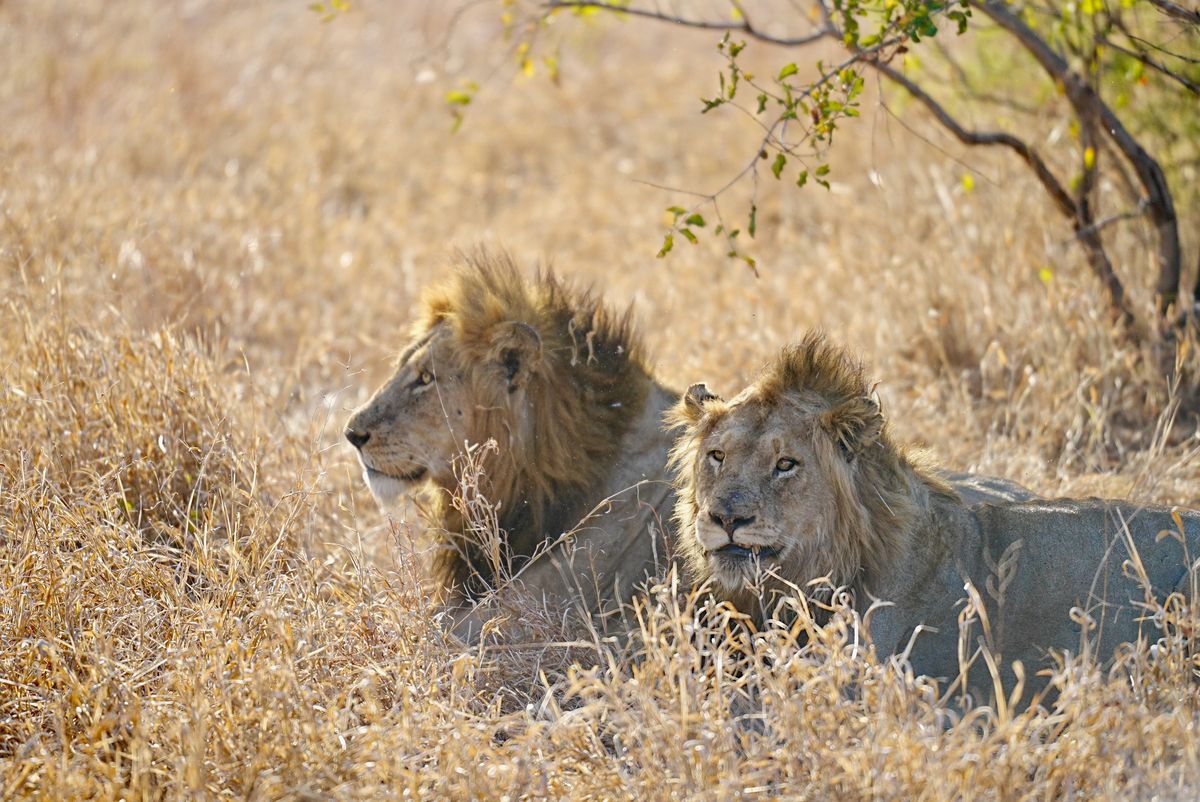
From lions in Gorongosa to the last dugongs of Bazaruto, discover Mozambique's endangered species and how responsible tourism helps protect them.
Mozambique Endangered Species: Lions, Dugongs & Sea Turtles
Mozambique harbours some of Africa's and the Indian Ocean's most threatened species. From lions recovering in Gorongosa to the last dugongs of Bazaruto, here's a guide to the animals that need our attention — and how tourism helps protect them.
Terrestrial Species
African Lion (Panthera leo)
Status: Vulnerable (IUCN Red List) Mozambique population: ~1,200-1,500
Lions are Mozambique's flagship species. Major populations exist in:
- Niassa National Reserve: ~800-1,000 lions — one of the largest populations in Southern Africa
- Gorongosa National Park: ~200+, recovering from near-zero after the civil war
- Limpopo National Park: Part of the Great Limpopo Transfrontier Park
- Zambezi Delta: Smaller, scattered populations
Threats: Snaring, retaliatory killings for livestock predation, habitat loss, prey depletion.
How tourism helps: Gorongosa's lion tracking program generates revenue for monitoring and anti-poaching. Community conservancies like Tchuma Tchato turn former lion hunters into lion guardians.
African Elephant (Loxodonta africana)
Status: Endangered (IUCN Red List) Mozambique population: ~10,000-15,000
Mozambique lost up to 90% of its elephants during the civil war but populations are recovering. Key areas:
- Niassa Reserve: ~4,000+ elephants
- Gorongosa: ~800+, recovered from ~200
- Maputo Special Reserve: ~400 elephants that walk to the ocean
- Quirimbas National Park: Smaller coastal herds
Threats: Ivory poaching (though declining), human-wildlife conflict, habitat fragmentation.
How tourism helps: Park entry fees fund ranger patrols. Community-owned lodges demonstrate that living elephants are worth more than poached ivory.
African Wild Dog (Lycaon pictus)
Status: Endangered (IUCN Red List) Mozambique population: ~200-300
One of Africa's rarest carnivores. Reintroduced to Gorongosa in 2018. Niassa Reserve also has a significant population. These painted dogs need vast territories and are extremely vulnerable to snaring.
Buffalo, Sable, and Other Antelopes
Recovering well in Gorongosa and Niassa after civil war devastation. The sable antelope — Mozambique's national symbol on the coat of arms — is found in Gorongosa, Niassa, and the Zambezi Valley.
Marine Species
Dugong (Dugong dugon)
Status: Vulnerable (IUCN Red List) Mozambique population: ~250 (East Africa's last viable population)
The dugong is perhaps Mozambique's most critically endangered animal. The Bazaruto Archipelago hosts the last meaningful population of these gentle "sea cows" in the entire western Indian Ocean.
Threats: Seagrass bed destruction from drag-net fishing, boat strikes, entanglement in fishing nets.
How tourism helps: Park fees at Bazaruto fund anti-poaching patrols and community fishing agreements that protect seagrass beds.
Sea Turtles
Mozambique's coastline is critical nesting habitat for five species:
| Species | Status | Nesting Season | |---------|--------|----------------| | Loggerhead | Vulnerable | October-March | | Leatherback | Vulnerable | October-March | | Green turtle | Endangered | Year-round | | Hawksbill | Critically Endangered | Year-round | | Olive Ridley | Vulnerable | Less common |
Key nesting beaches include:
- Bazaruto Archipelago: Protected nesting sites
- Primeiras & Segundas Islands: Remote nesting beaches
- Ponta do Ouro: Turtle monitoring programs
- Vamizi Island: Community-protected nesting beaches
Threats: Egg harvesting, bycatch in fishing nets, plastic pollution, coastal development.
How tourism helps: Turtle watching tours provide income to coastal communities, creating incentive for protection over harvesting.
Whale Shark (Rhincodon typus)
Status: Endangered (IUCN Red List) Mozambique presence: Year-round, aggregations in Tofo (Inhambane)
Tofo Beach is one of the best places in the world to swim with whale sharks. These gentle giants gather to feed on plankton blooms.
Manta Ray (Mobula birostris & M. alfredi)
Status: Endangered (IUCN Red List) Mozambique presence: Year-round at cleaning stations off Tofo and Bazaruto
Humpback Whale (Megaptera novaeangliae)
Status: Least Concern (recovering) Mozambique presence: June-September migration through Mozambican Channel
What Travellers Can Do
Choose Responsible Tours
- Book with operators that follow wildlife watching guidelines (distance, time limits, group size)
- Avoid any experience that involves touching, feeding, or riding wild animals
- Choose community-owned lodges — they have the strongest incentive to protect wildlife
Support Conservation
- Pay park fees — they directly fund protection
- Donate to organisations like Gorongosa Restoration Project, Niassa Lion Project, Marine Megafauna Foundation
- Visit community conservation areas (Tchuma Tchato, Marromeu Reserve)
Reduce Your Impact
- Don't buy wildlife products (ivory, coral, shells, turtle products)
- Use reef-safe sunscreen
- Don't touch coral or marine life while diving
- Take your rubbish with you — plastic is deadly to marine life
Key Takeaways
- Mozambique is home to lions, elephants, wild dogs, dugongs, turtles, and whale sharks
- The civil war devastated wildlife; conservation is bringing it back
- Tourism revenue is the most powerful conservation tool
- Bazaruto's dugongs are the most endangered — visit responsibly
- Choose community-owned lodges and responsible operators
- Never buy wildlife products
Last updated: August 2026