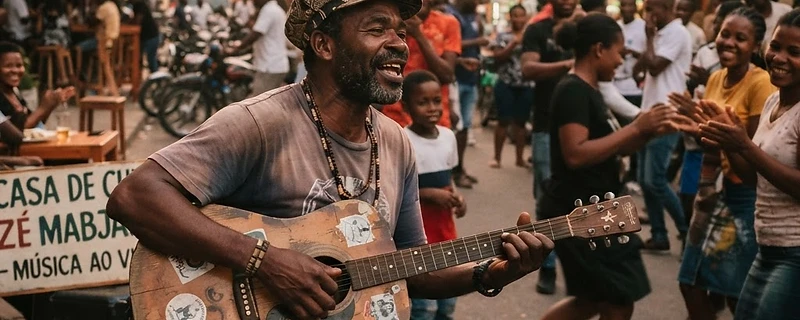
From the shanty towns of colonial Maputo to global stages, marrabenta is the music that gave Mozambique its voice. Discover the sound that built a city's identity.
The Music of the People
In the 1950s, in the bairros de caniço — the reed-and-tin neighbourhoods that surrounded colonial Lourenço Marques — a new sound was born. It was fast, joyful, and subversive. It blended traditional Mozambican rhythms with Portuguese folk guitar, Congolese rumba, and a raw urban energy that belonged to no one else. The people called it marrabenta.
The name comes from the Portuguese word rebentar — to burst, to explode. And that is exactly what marrabenta does. It bursts.
Born in the Margins
Marrabenta emerged from the margins of colonial society. In the municipios (the African neighbourhoods, as opposed to the cidade de cimento, the cement city where Europeans lived), people made music with whatever they had: homemade guitars strung with fishing line, timbila (traditional xylophones), oil-can basses, and the human voice.
The early marrabenta musicians were not professionals. They were dockworkers, domestic servants, market traders, and fishermen who gathered on street corners and in backyards to play after long days of labour. The music was their release — a space where they could sing about love, hardship, daily life, and, increasingly, resistance.
The Sound of Resistance
As Mozambique's independence movement grew in the 1960s and early 1970s, marrabenta became a vehicle for coded political messages. Songs that appeared to be about love or daily life contained double meanings that the colonial censors could not always detect. The rhythm was joy, but the words were defiance.
After independence in 1975, marrabenta became a symbol of Mozambican identity. It was played at rallies, on national radio, and in the newly renamed city of Maputo (formerly Lourenço Marques). For a brief, hopeful moment, marrabenta was the soundtrack of a new nation.
The Voices of Marrabenta
Several artists defined the genre:
-
Fany Mpfumo (1928–2005): Often called the "King of Marrabenta," Mpfumo began playing in the 1940s and continued for six decades. His songs — Nwanimula Vabi, Valani Va Valeni — are classics of the genre.
-
Dilon Djindji (1927–2023): A virtuoso guitarist from Marracuene, Djindji's music bridged traditional Tsonga rhythms and urban marrabenta. He performed well into his 90s.
-
Wazimbo (born 1950): The voice of post-independence marrabenta, Wazimbo's Nwahulwana Vula became one of the most internationally recognized Mozambican songs.
-
Orchestra Marrabenta Star de Moçambique: A collective that took marrabenta to international stages in the 1980s and 1990s.
The Marrabenta Festival
Every February, Maputo hosts the Marrabenta Festival — a multi-day celebration of Mozambican music and culture. The streets of the city fill with sound: old marrabenta legends share stages with young artists fusing the genre with hip-hop, electronic, and Afrobeat. The festival is one of the best times to visit Maputo, and it represents something profound: a living tradition that continues to evolve.
Marrabenta Today
Marrabenta is not a museum genre. In Maputo's bars, clubs, and street corners, the music continues to evolve. Young artists like Stewart Sukuma, Chiquito, and the collective GproFim carry the tradition forward, blending it with contemporary sounds while honouring its roots.
What makes marrabenta endure is its emotional core. It is music made by people who have known hardship and chosen joy. The dance that accompanies it — fast-footed, hip-swinging, communal — is an act of resilience. You cannot dance marrabenta alone. You cannot listen to it sitting still.
Where to Hear It
- Marrabenta Festival: February, various venues across Maputo.
- Centro Cultural Franco-Moçambicano: Regular concerts year-round.
- CCFM (Circulo Cultural da Cidade de Maputo): Live music most weekends.
- Gil Vicente and Africa Bar: Maputo nightlife staples with frequent live marrabenta.
- Mafalala neighbourhood: Cultural tours (featured on nendeni.com) often include traditional music performances.
More Than Music
Marrabenta is the sound of a people who were told they had no voice and made one anyway. It is the sound of Maputo — not the Maputo of embassies and air-conditioned offices, but the Maputo of street markets, chapas, late-night conversations, and dancing in the dust.
If you want to understand Mozambique, listen to marrabenta. Better yet, dance to it.
Discover cultural experiences and community tours in Maputo at nendeni.com.