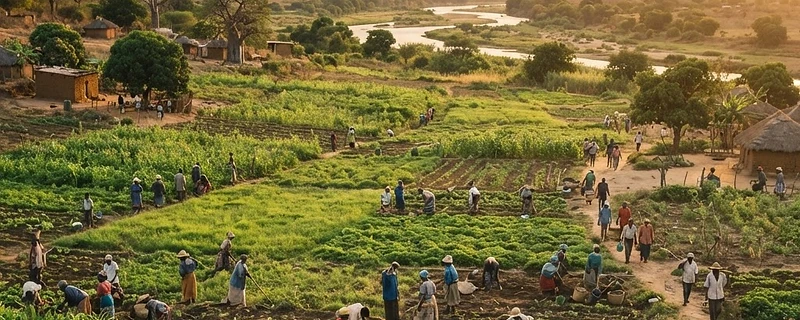
In Gaza's Limpopo Valley, communities are rebuilding after displacement and floods, using community tourism as a tool for self-determination and economic independence.
The Valley That Keeps Rising
The Limpopo River is southern Africa's great lifeblood. Rising in South Africa, it flows through Botswana, Zimbabwe, and finally Mozambique — where it fans out into a vast delta plain in Gaza province before reaching the Indian Ocean at Xai-Xai. Along its banks, communities have farmed, fished, and traded for centuries.
They have also suffered. The Limpopo Valley is one of the most disaster-prone regions in Mozambique. The catastrophic floods of 2000 displaced hundreds of thousands. Cyclone Idai in 2019 brought more devastation. Repeated displacement, combined with colonial and post-independence land displacement, has tested these communities to their limits.
And yet, they keep rising. Today, community tourism is emerging as a powerful tool for economic self-determination in the Limpopo Valley — a way to generate income that stays local, creates jobs, and gives communities a reason to protect the landscapes they call home.
A History of Displacement
The story of the Limpopo Valley is, in many ways, the story of rural Mozambique. The Tsonga and Shangaan peoples who inhabit the valley have endured:
- Colonial land seizures: Portuguese settlers claimed the most fertile valley land for cotton and sugar plantations, pushing communities onto marginal land.
- Post-independence cooperative failures: Socialist-era cooperatives often disrupted traditional land management without providing viable alternatives.
- Civil war (1977–1992): The conflict ravaged rural Gaza, destroying infrastructure and displacing populations.
- Floods: The 2000 floods submerged vast areas of the valley under metres of water. Cyclone Idai in 2019 repeated the devastation.
- Climate change: Increasingly unpredictable rainfall patterns make traditional agriculture ever more precarious.
Each time, the communities of the Limpopo Valley have rebuilt. But rebuilding without economic alternatives is a cycle of survival, not development. Community tourism offers a way out.
Covane Community Lodge: A Model
Covane Community Lodge, listed on nendeni.com with a 100% community benefit rate, is one of the most inspiring examples of community-owned tourism in Mozambique. Located on a bluff overlooking the Elefantes River (a Limpopo tributary) near Massingir, the lodge was built by the community, is owned by the community, and returns all profits to the community.
What this means in practice:
- Employment: Lodge staff — managers, cooks, guides, housekeepers — are all local community members.
- Profit distribution: After operating costs, 100% of profits go to community projects: schools, boreholes, clinics.
- Land rights: The lodge sits on community land held under Mozambique's DUAT (Direito de Uso e Aproveitamento da Terra) system, giving the community legal tenure.
- Cultural preservation: The lodge offers cultural experiences — traditional dancing, storytelling, craft demonstrations — that keep Tsonga and Shangaan traditions alive and valued.
- Conservation: The lodge borders the Limpopo National Park. By benefiting from tourism, the community has a direct economic stake in protecting wildlife rather than viewing it as a threat to crops and livestock.
The Limpopo National Park Connection
The Limpopo National Park, Mozambique's portion of the Great Limpopo Transfrontier Park (linking with Kruger in South Africa and Gonarezhou in Zimbabwe), was established in 2001 on land that was previously a hunting concession. The creation of the park displaced some communities and restricted others' access to natural resources.
The history of conservation and community relations in the Limpopo Valley is complex. Parks can bring benefits — tourism revenue, jobs, ecosystem protection — but they can also create conflict when local people are excluded from land they have used for generations.
Community-owned tourism ventures like Covane Lodge represent a reconciliation: communities living alongside parks, benefiting from them, and having a voice in how they are managed. This is the model that makes conservation sustainable.
What Travellers Can Experience
- Covane Community Lodge: Stay in simple but comfortable chalets overlooking the river. Eat traditional Tsonga food. Walk with community guides.
- Boat safaris: On the Massingir Dam and the Elefantes River — hippos, crocodiles, and extraordinary birdlife.
- Cultural visits: Traditional dancing, storytelling evenings, visits to community schools and projects funded by tourism.
- Fishing: Traditional fishing methods with local guides.
- Community walks: Learn about Tsonga agriculture, traditional medicine, and daily life in the valley.
The Bigger Picture
The Limpopo Valley is not a tourist destination in the conventional sense. It does not have luxury beach resorts or five-star safari lodges. What it has is something more valuable: communities that are rebuilding themselves, on their own terms, using tourism as one tool among many.
When you visit Covane Community Lodge, your money does not leave the valley. It does not flow to a foreign hotel chain or a distant shareholder. It stays — in wages, in community projects, in schools, in boreholes, in the quiet, stubborn resilience of people who have lost everything more than once and chosen to build again.
That is what 100% community benefit means. Not a marketing claim. A promise kept.
Find community-owned tourism in Gaza at nendeni.com.