
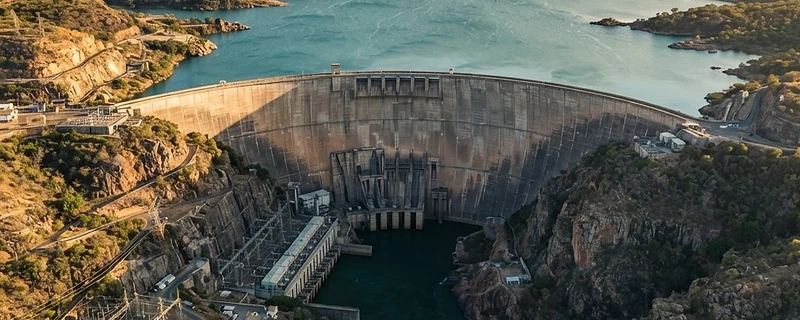
The Cahora Bassa Dam in Tete province is one of Africa's largest hydroelectric projects. This practical guide covers how to visit, what to see, and the environmental debate it continues to provoke.
Cahora Bassa: Visiting Africa's Most Controversial Dam
In the Zambezi Valley of Tete province, a wall of concrete 171 metres high holds back the fourth-largest artificial lake in Africa. This is the Cahora Bassa Dam — a feat of engineering that reshaped a river, displaced communities, and remains central to Mozambique's economy and ecology.
A Brief History
Construction began in 1969, during the final years of Portuguese colonial rule. The dam was built by a consortium of Portuguese, German, and South African companies, with financing tied to apartheid-era South Africa's appetite for electricity. At the time, it was the largest dam project in Africa.
The dam became operational in 1977 — two years after Mozambique's independence. Initially, 82% of the Cahora Bassa Hydroelectric Company (HCB) was owned by Portugal, with Mozambique holding only 18%. After decades of negotiation, Mozambique finally acquired majority control in 2007, and took full ownership in 2019.
What the Dam Does
Cahora Bassa generates 2,075 megawatts of electricity from five turbines. The power flows to South Africa via a 1,400-km HVDC transmission line — one of the longest in the world. A smaller portion serves Mozambique's domestic grid, though many rural areas near the dam still lack reliable electricity.
Visiting the Dam
Can you visit? Yes — with advance permission. The dam operator, HCB, offers guided tours of the facility.
How to Arrange a Visit
- Contact HCB in advance (via their offices in Songo or online). Security clearance is required.
- Tours typically last 1–2 hours and include the dam wall, the turbine hall, and viewpoints over the reservoir.
- Bring identification (passport for international visitors).
- Photography is restricted in certain areas — follow your guide's instructions.
Lake Cahora Bassa
The reservoir — sometimes called Lake Cahora Bassa — stretches 250 km upstream into Tete province and is a destination in its own right.
- Fishing: Tiger fish and tilapia thrive in the lake. Several lodges offer fishing packages.
- Boat cruises: Sunset cruises on the reservoir are spectacular — the escarpment glows red and gold.
- Wildlife: The lake's shoreline attracts elephant, hippo, and crocodile. Bird life is abundant.
The Environmental Debate
Cahora Bassa is not without controversy. The dam dramatically altered the Zambezi's natural flood cycle, which for millennia had deposited nutrient-rich sediment on the floodplains downstream. These floods sustained agriculture, fisheries, and grazing land for communities across the delta. With regulated flows:
- Agricultural productivity downstream declined.
- Mangrove ecosystems in the Zambezi Delta were disrupted.
- Prawn fisheries at the river's mouth — a major economic resource — were affected.
- Saltwater intrusion increased in the delta.
There are ongoing debates about modifying dam operations to release "environmental floods" — controlled releases that mimic the natural flood cycle. Early experiments have shown promising results.
Practical Tips for Travellers
- Getting there: Fly to Tete (Chingozi Airport, TET). Songo town is about 180 km downstream by road.
- Where to stay: Cahora Bassa Hotel in Songo; various fishing lodges along the lake shore.
- Best time: May to September (dry, cooler). Avoid the rainy season (December–March) when roads may be impassable.
- Currency: Bring Meticais. Cards are rarely accepted in Songo.
- Combine with: A visit to the Zambezi Delta (by boat from Marromeu) to see the downstream impacts.
The Bigger Picture
Cahora Bassa is a mirror of Mozambique's relationship with its own resources — built by outsiders, fought over for decades, now controlled by Mozambicans, and still wrestling with the balance between development and ecology. A visit here is not just about concrete and turbines. It is about understanding the complexities of progress in Africa.