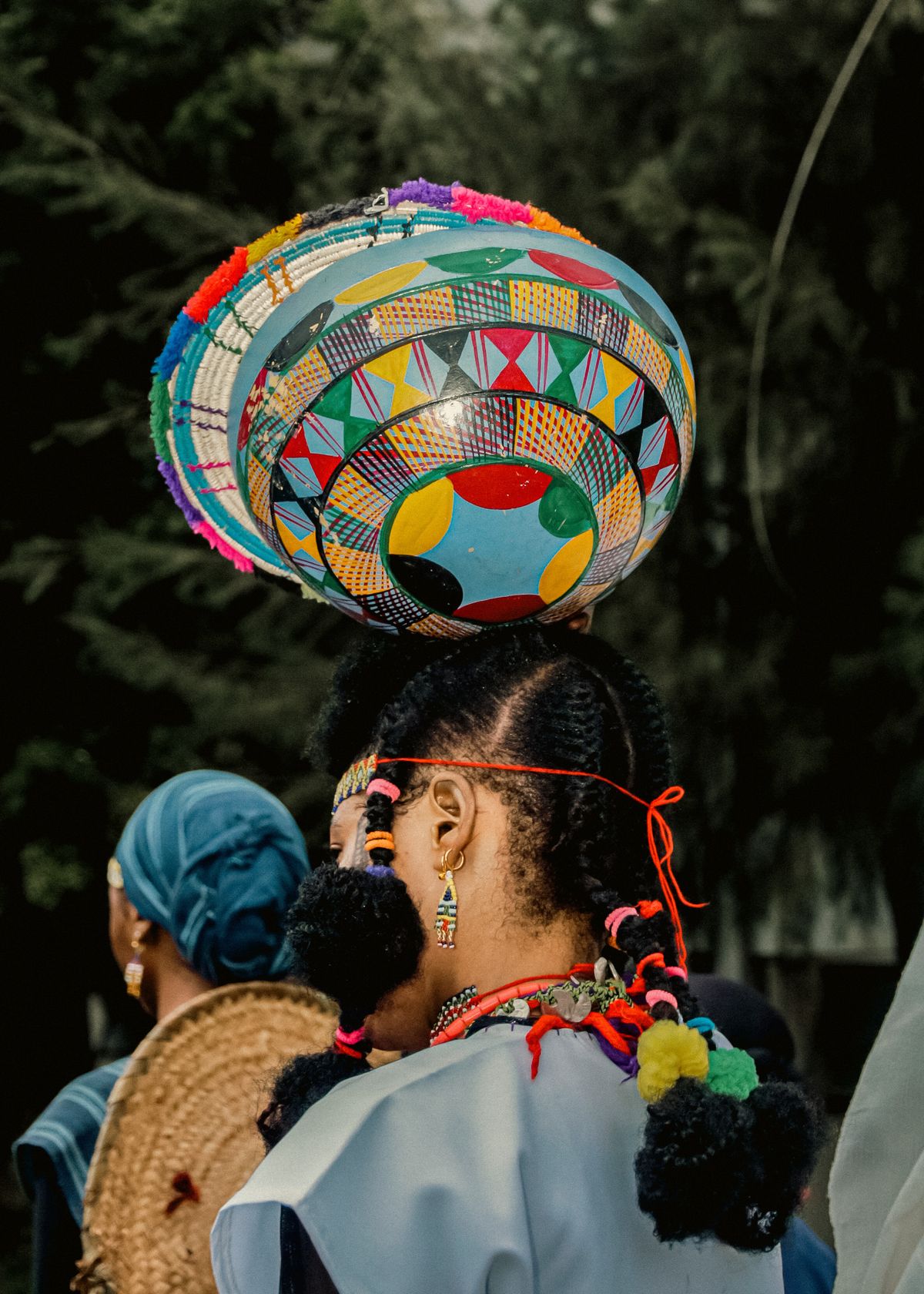
From grain winnowing baskets to elaborate ceremonial pieces, Mozambican basketry weaves together utility, beauty, and ancestral knowledge. Explore this ancient craft and its growing American appeal.
Basketry of Mozambique: Woven Stories
The Weaver's Hand
In the quiet hours of a Mozambican afternoon, when the sun sits low and the cooking fire is banked, you might find a woman sitting at the doorway of her home, her hands moving with impossible speed — drawing strands of palm leaf through a form that is slowly, surely becoming a basket.
Basketry is one of the most ubiquitous and underappreciated craft traditions in Mozambique. Unlike sculpture or capulana, it rarely makes it into galleries or museums. Yet baskets are essential — for winnowing grain, storing food, carrying produce, serving beer at ceremonies, and even as cradles for infants.
Materials and Techniques
Mozambican basketry uses whatever the local environment provides:
- Ilala palm (Hyphaene coriacea) — the primary material in the south, producing flexible, durable strands that can be dyed with natural pigments.
- Papyrus and reeds — used in wetland areas like the Zambezi Delta and Lake Niassa shores.
- Bamboo — common in Tete and Manica's highland areas.
- Grass straw — the fine winnowing baskets of Gaza and Inhambane are made from local grasses, sometimes coloured with commercial dyes for the tourist market.
The techniques are equally varied: coil weaving (stitching a wrapped core), plaiting (interlacing flat strips), twining (wrapping two elements around a warp), and wattle work (flexible woven panels used for walls and screens).
Regional Basket Traditions
Gaza Province produces some of Mozambique's most recognised baskets — the plate-shaped winnowing trays (peneiras) used to separate grain from chaff. These are often dyed in geometric patterns of brown, black, and natural straw.
Inhambane is known for lidded storage baskets, tightly woven to keep insects from grain. Some are so finely made they are virtually airtight.
Cabo Delgado and Niassa produce coiled baskets with distinctive geometric patterns, often in the red-brown of naturally dyed ilala palm.
Zambezia basketry incorporates papyrus and wetland reeds, producing softer, more flexible containers suited to the riverine environment.
Basketry and Women's Economy
As with pottery, basketry is primarily a women's craft. It is often done during agricultural off-seasons — a way of generating income when fields are fallow. Baskets are sold in local markets, to intermediary traders, and increasingly through cooperatives that connect to urban and international buyers.
The economic returns are small — a winnowing tray might sell for 100–300 meticais ($1.50–$5) in a rural market. But for women with few other income sources, basketry provides a crucial economic lifeline.
The American Market
American interest in African basketry has a long history. The coiled sweetgrass baskets of the American South (South Carolina Gullah tradition) have direct West African roots — and African basketry traditions generally resonate deeply with American audiences who understand the craft's historical significance.
For Mozambican baskets specifically, the American market operates through:
- Fair trade importers who source directly from cooperatives, ensuring artisans receive a larger share of the final price.
- Home décor retailers seeking unique, handmade storage solutions.
- Museum shops — the Smithsonian African Art museum shop and similar institutions stock African baskets.
- Online marketplaces — platforms like Etsy and Novica connect individual Mozambican weavers to American buyers.
The challenge, as with all Mozambican crafts, is value capture. A basket that sells for $3 in a Mozambican village might retail for $30–$80 in America. The cooperatives and fair trade organisations that cut out intermediaries are essential to ensuring artisans benefit from this price difference.
Weaving the Future
Basketry faces the same pressures as pottery — plastic containers, metal basins, and manufactured goods displace handmade baskets. But there is a counter-trend: growing American and European demand for authentic, handmade, ethically sourced products.
Cooperatives in Gaza and Inhambane are beginning to produce baskets specifically for the export market — larger, more decorative pieces that command higher prices than utilitarian wares. Training programmes teach weavers to dye with natural pigments, create new forms, and understand quality standards for international markets.
The story of Mozambican basketry is a story of adaptation — an ancient craft finding new markets, new forms, and new relevance in a globalised world.