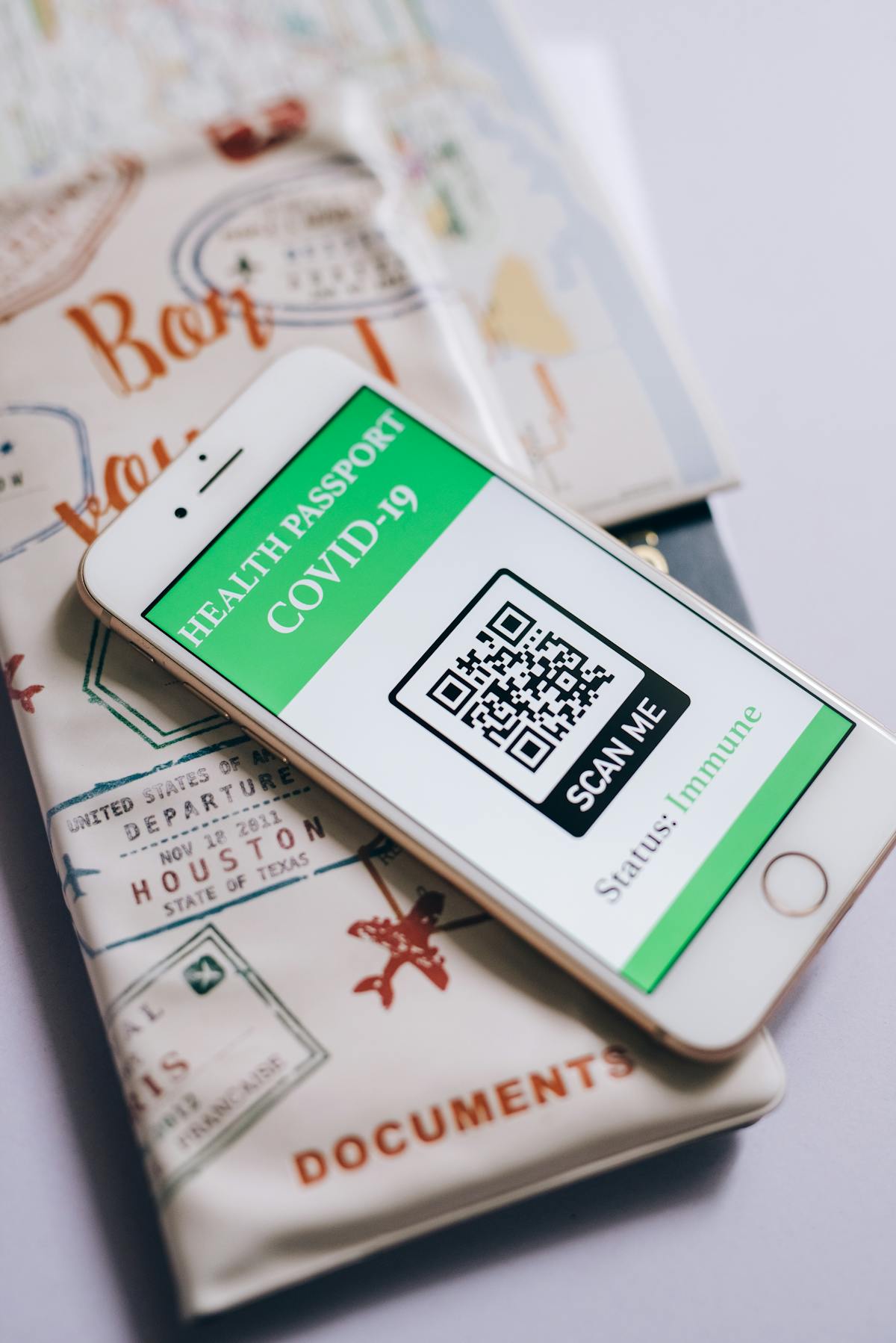
Scan a QR code on your booking receipt and see exactly where your money went — community funds, guide wages, conservation fees — all verified on the Polygon blockchain. This is radical transparency.
Scan. See. Trust.
Imagine this: You've just booked a community homestay in Ilha de Moçambique through nendeni.com. Your booking confirmation includes a QR code. You scan it with your phone and instantly see:
- Total paid: $120
- Community Fund: $60 (50%) → wallet 0x7A3...e4F — ✅ Verified
- Local Wages: $24 (20%) → wallet 0xB8c...2d1 — ✅ Verified
- Operator Revenue: $30 (25%) → wallet 0xE1f...3bC — ⏳ Pending
- Carbon Offset: $6 (5%) → wallet 0xC2a...7eD — ✅ Verified
Each line links to PolygonScan — the public blockchain explorer — where you can verify the transaction yourself. No one can alter this record. No one can fake it. It's mathematical proof.
How QR Code Transparency Works
At Booking
When a traveler confirms a booking on nendeni.com, the system:
- Creates a booking record on the Polygon blockchain via smart contract
- Allocates funds to each category (community, wages, conservation, operator, carbon)
- Generates a QR code containing the booking tracking code
- Embeds the QR code in the booking receipt
At Verification
The traveler scans the QR code and sees the FundTrailViewer — a real-time display of all fund allocations, their status (verified/pending), and links to the blockchain explorer.
Community Confirmation
Community members receive a WhatsApp message when funds are allocated. They confirm receipt by tapping a button — this triggers the smart contract's verifyFundReceipt() function, marking the allocation as verified on-chain.
This creates a closed trust loop: traveler books → funds allocated on-chain → community confirms → traveler sees verified status → trust reinforced → books again or recommends to friends.
Why QR Codes?
QR codes are the simplest bridge between the physical and digital worlds:
- No app needed: Any phone camera can scan a QR code
- Universal: Works on every device, every browser
- Instant: Scanning takes 1 second
- Shareable: Travelers screenshot and share their impact trail on social media
The Social Sharing Engine
When travelers see that 70% of their booking went to verified community funds, they share it. The QR code becomes a social media certificate — proof that their travel choices made a difference.
This creates organic viral marketing:
- "My $450 Gorongosa safari put $225 directly into the community school fund. Here's the blockchain proof: [QR code]"
- Friends see this and think: "I want MY travel to do that too."
Beyond Tourism: Government and Donor Applications
The same QR code transparency system could be used by:
- ANDITUR: National tourism revenue tracking
- Ministry of Tourism: Verifiable community benefit data for policy
- Donors: Real-time proof that grant funds reach intended recipients
- International media: Verifiable data for tourism impact stories
The Revolution Is Simple
This isn't complex technology for the traveler. They scan a QR code. They see where their money went. That's it. But behind that simple act is a smart contract on a public blockchain, a community confirmation system via WhatsApp, and a trust infrastructure that no traditional tourism platform offers.
No tourism platform in the world does this. Nendeni.com is building it now.