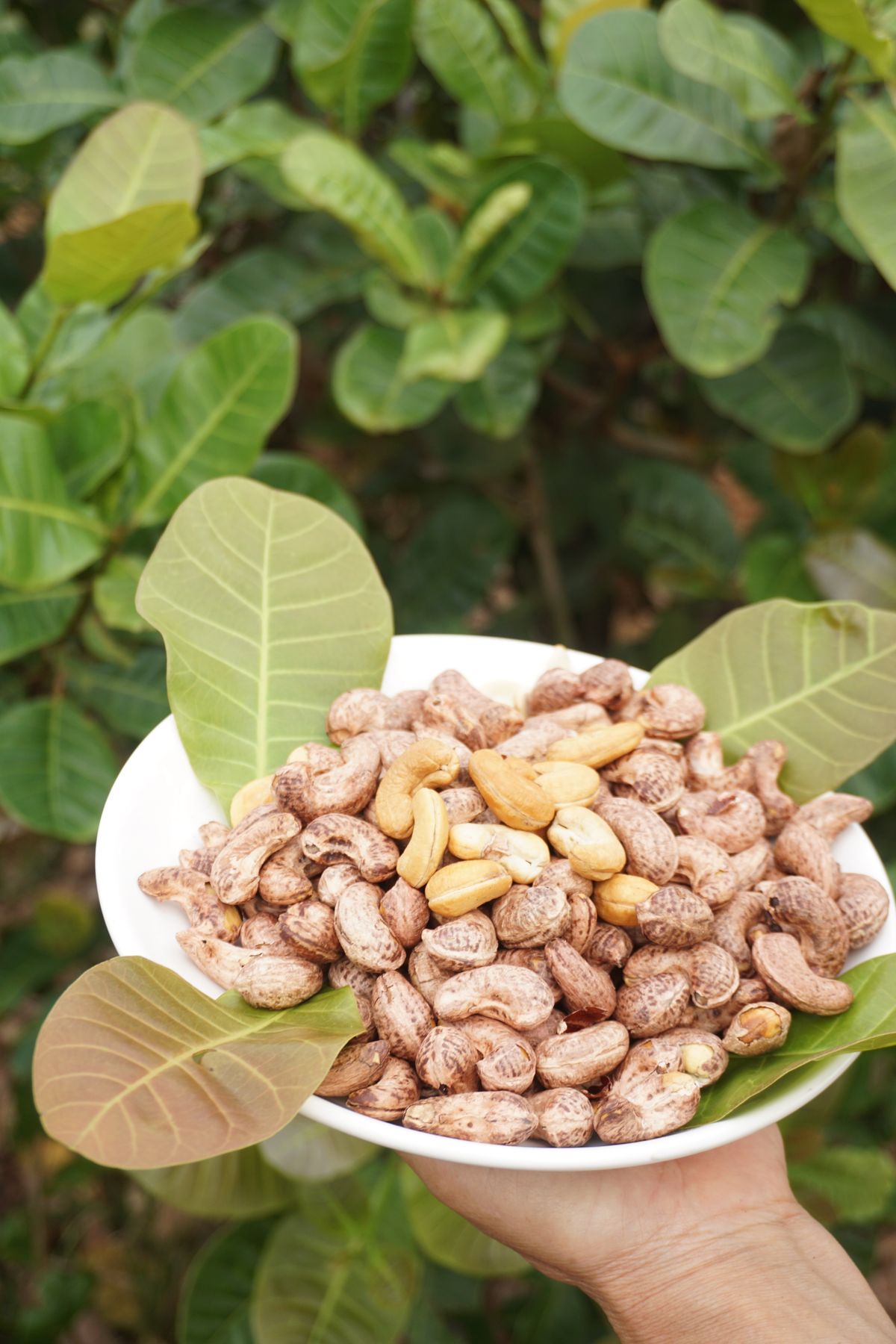
Mozambique was once the world's largest cashew producer. The story of caju — from colonial golden age to civil war collapse to modern recovery — is the story of Mozambique itself. Plus: where to buy the best roasted cashews on Earth.
Cashews: Mozambique's Golden Crop
Mozambique was once the world's largest cashew producer. The cashew nut — caju in Portuguese — is woven into the country's agriculture, cuisine, economy, and identity. This is the story of a nut that built and broke a nation, and is now being rebuilt.
The Cashew Story
Origins
The cashew tree (Anacardium occidentale) is native to Brazil, where Portuguese colonists called it caju (from the Tupi word acajú, meaning "nut that produces itself"). Portuguese traders brought cashew trees to Mozambique and India in the 16th century. The trees thrived in Mozambique's coastal sandy soils and tropical climate.
The Golden Age (1960s–1970s)
By the 1960s, Mozambique was the world's largest producer of raw cashew nuts, producing over200,000 tons annually. Cashew plantations stretched along the entire coastline. The industry employed hundreds of thousands of people — mostly women — in processing factories where nuts were shelled by hand.
The Collapse (1980s–1990s)
The civil war (1977–1992) devastated the industry. Plantations were abandoned, factories destroyed, and trees aged without maintenance. Then, in 1995, the World Bank forced Mozambique to liberalize the cashew sector — removing export restrictions on raw nuts. Indian processing companies bought Mozambique's entire harvest at rock-bottom prices, and domestic processing collapsed. Over 10,000 factory workers — mostly women — lost their jobs. It's considered one of the World Bank's most notorious policy failures in Africa.
The Recovery (2000s–Present)
Mozambique is rebuilding. New processing factories have opened, production is increasing, and the government is promoting domestic value addition. Annual production has recovered to approximately 100,000–140,000 tons, making Mozambique one of Africa's top producers. The goal is to return to the glory days — but this time, processing the nuts in-country.
How Cashews Grow
The cashew is one of nature's most curious fruits. Each cashew "apple" (the swollen stem, technically not a fruit) is yellow or red, juicy, and sweet-tart. Hanging below it, like a boxing glove, is the true fruit — the cashew nut, encased in a toxic shell.
The tree: Cashew trees are drought-resistant, grow in poor soils, and can produce for 30–50 years. They're ideal for Mozambique's coastal sandy soils and require minimal inputs.
The apple: Eaten fresh, made into juice, wine, and jam. In Mozambique, cashew apple juice (sumo de caju) is a beloved drink — sweet, slightly astringent, and incredibly refreshing.
The nut: The shell contains urushiol — the same compound as poison ivy. Raw cashew shells will blister skin. Processing requires either roasting (which destroys the toxin) or careful chemical/mechanical extraction. This is why cashew processing was historically labor-intensive.
Cashew Processing: A Woman's Industry
In Mozambique, cashew processing has always been a woman's industry. The traditional method — still used in small-scale operations — involves:
- Sun-drying the raw nuts for 2–3 days
- Boiling or roasting to make the shell brittle
- Hand-shelling with wooden mallets — skilled workers can shell 5–8 kg per day
- Peeling the thin skin to reveal the white kernel
- Grading by size and quality
Modern factories use mechanical shelling, but many artisanal operations still shell by hand. The hand-shelled nuts are considered premium — less breakage, better quality.
Cashew in Mozambican Cuisine
Roasted Cashews (Caju Torrado)
The simplest and most popular preparation. Raw nuts are roasted with salt, sometimes with a touch of piri-piri. Sold in markets, at bus stops, and as bar snacks everywhere. Mozambican roasted cashews are considered among the best in the world — large, creamy, and rich.
Cashew Chicken (Frango com Caju)
A Mozambican-Chinese-Portuguese fusion dish. Chicken stir-fried with cashews, vegetables, and a soy-garlic sauce. Popular in Maputo's restaurants.
Cashew Apple Drink (Sumo de Caju)
Fresh-pressed juice from the cashew apple. Sweet, tangy, and incredibly refreshing on a hot day. Available at markets and roadside stalls during the harvest season (October–January).
Cashew Wine (Vinho de Caju)
Fermented cashew apple juice — a traditional drink in rural areas. Lightly alcoholic, sweet, and tart. Increasingly produced commercially as a craft beverage.
Cashew Butter
Ground roasted cashews blended into a spread — richer than peanut butter and increasingly popular.
Caju com Mel
Cashews roasted with honey — a simple, delicious treat sold at markets and craft fairs.
Visiting Cashew Country
Where to See Cashew Production
- Nampula Province: The heart of Mozambique's cashew belt. Vast plantations and processing factories.
- Cabo Delgado (southern districts): Cashew orchards dot the landscape.
- Zambezia: Major growing region with community-level processing.
- Any rural market (October–February): Buy fresh cashew apples and watch vendors shell nuts by hand.
What to Buy
- Roasted cashews in markets: Fresher and cheaper than anything exported. A 500g bag costs $2–4.
- Cashew apple juice: Available fresh during harvest season.
- Cashew wine: Look for community-produced bottles.
- Honey-roasted cashews: Available at FEIMA market in Maputo.
The Bigger Picture
Cashews represent Mozambique's economic story in miniature — abundant natural wealth, colonial exploitation, post-independence collapse, and slow, determined rebuilding. The cashew industry's recovery is one of Mozambique's quiet success stories. Every bag of Mozambican cashews you buy supports a farmer, a processor, and a supply chain that is gradually rebuilding the nation's agricultural backbone.
When you eat a Mozambican cashew, you taste sunshine, sandy soil, and the patient work of women who have shelled these nuts for generations. It's not just a snack. It's a story of resilience, bottled in a shell.